Trend briefing
Recycled content: what 30% really means
"Made with recycled content" can mean factory offcuts fed back into the same machine, bottles turned into fleece, or a share allocated on paper. From 2030 the EU will require real post-consumer content in plastic packaging. Here is how to read a recycled claim, and where recycled material really does cut carbon.
In short
Recycled content is one of the surest ways to cut a material's footprint, and one of the easiest claims to stretch.
- For metals, glass and the common plastics, recycled grades are far lower in carbon than new.
- "Recycled" covers very different things: old products, factory scrap, or a share allocated on paper.
- A percentage means little until you know what it is a percentage of, and where the material came from.
- From 2030 the EU will require minimum post-consumer recycled content in plastic packaging.
The database tags 50 grades as recycled. This briefing is about how to read the claim.
Three things called recycled
1. Post-consumer. Material from products that people have used and thrown away: bottles, cans, old cars, worn carpets. This is the kind that reduces waste, and the hardest to get clean.
2. Pre-consumer. Scrap from manufacturing that is sold on to someone else: offcuts from a stamping plant, trimmings from a film line. Using it is sensible, but it was never going to be wasted, and a factory that makes more scrap should not score better for it.
3. Run-around scrap. Sprues and edge trim fed straight back into the same machine. Standards do not count this as recycled content at all, though marketing sometimes does.
So "30% recycled" can mean 30% old bottles, or 30% of someone else's offcuts. Ask which. The EU's packaging targets count only the first.
Where recycled cuts carbon most
The saving depends on how much energy the new material takes.
- Aluminium: the biggest gain. Recycled is 1.35 kg CO₂e/kg against 10.6 kg CO₂e/kg for new.
- Steel: recycled steel from an electric furnace is 0.5 kg CO₂e/kg against 2.1 kg CO₂e/kg.
- Plastics: recycled PET is 0.7 kg CO₂e/kg against 2.5 kg CO₂e/kg; recycled nylon fibre 1.6 kg CO₂e/kg against 8.25 kg CO₂e/kg.
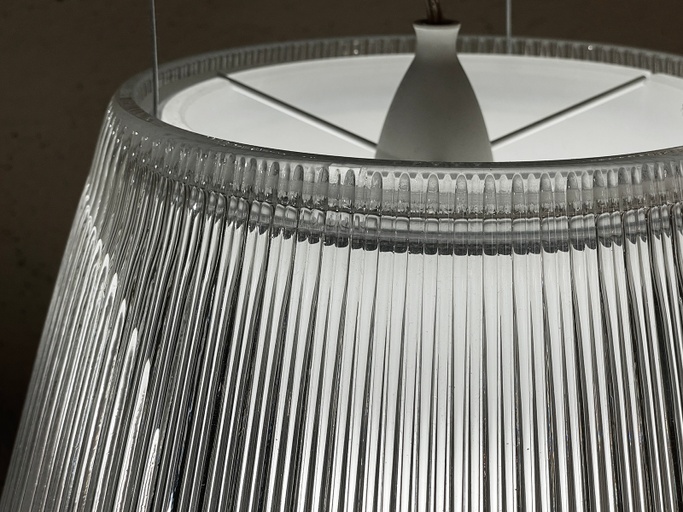
- Glass: a smaller gain, 0.65 kg CO₂e/kg against 1.05 kg CO₂e/kg, because the furnace still has to run.
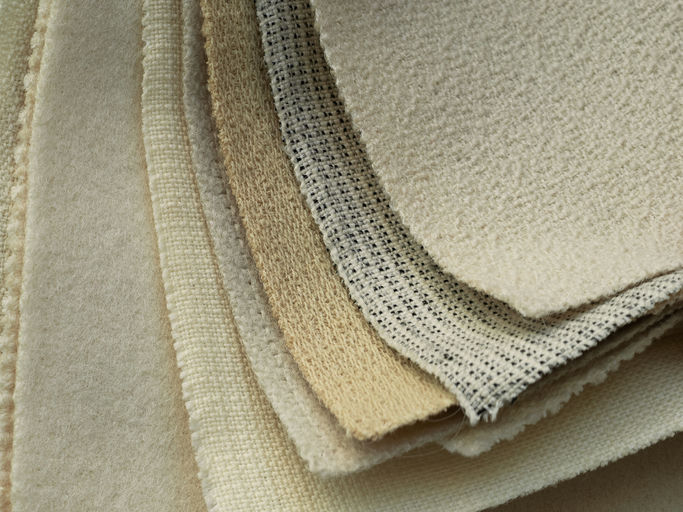
- Wool: the most dramatic of all, recycled wool at 0.5 kg CO₂e/kg against 32.5 kg CO₂e/kg for new, because the sheep is left out.
For paper and board the carbon gain is small; the benefit is in fibre and forests saved.
New against recycled (kg CO₂e per kg)
Metals: the limit is scrap, not technology
Metals can be melted and remade without losing quality, and scrap has value, so most of it is already collected. That changes what a recycled-content claim achieves.
If every tonne of scrap is already being used somewhere, one buyer asking for 100% recycled metal does not create more recycling; it moves scrap from one product to another. What does help:
- Post-consumer scrap that is hard to use, such as mixed or coated aluminium that would otherwise be downgraded. Grades with a stated share of post-consumer scrap are doing real work.
- Low-carbon new metal for the rest, since recycled supply covers only about a third of demand for steel and aluminium.
- Keeping alloys separate so scrap keeps its value.
The metals deep dive in this library goes further.
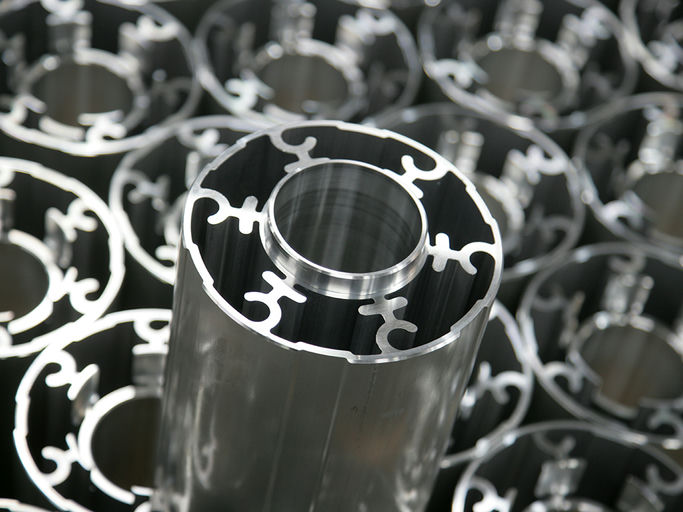 Hydro Circal 75R aluminium alloyHydroHydro Circal 75R is recycled aluminium made up of a minimum of 75% post-consumer scrap, such as window frames, doors and facades that have reached the end of their life. The balance being a combination of manufacturing waste and alloying elements to bring it in line with 6060 specification. Image Hydro.Image: Hydro
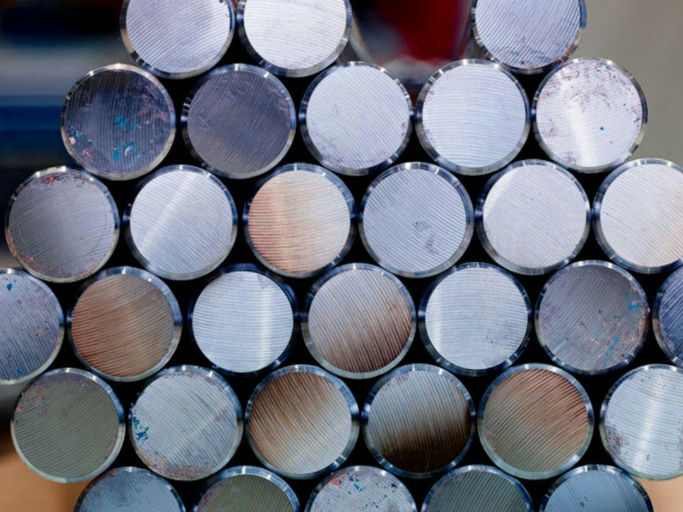 Ovako recycled steelOvakoOvako products consist of an average of 97% recycled steel scrap, according to the company (around 800,000 tons per year). Ovako mills recycle their own steel scrap, as well as scrap from downstream manufacturing industries and end of life products. Steel can be remelted into new steel without loss of quality.Image: Ovako
Textiles: the bottle problem
Recycled polyester is the most common recycled claim in fashion and furnishing. In 2024 it was about 12% of all polyester, and 98% of it was made from plastic bottles. Less than 1% of the world's fibre comes from recycled textiles.
Turning bottles into fibre lowers the fibre's carbon, but it is a one-way trip. A bottle can become a bottle again many times; a garment made from bottles is burned or landfilled at the end. And as drinks makers are required to put recycled plastic into their own bottles, the two industries compete for the same supply.
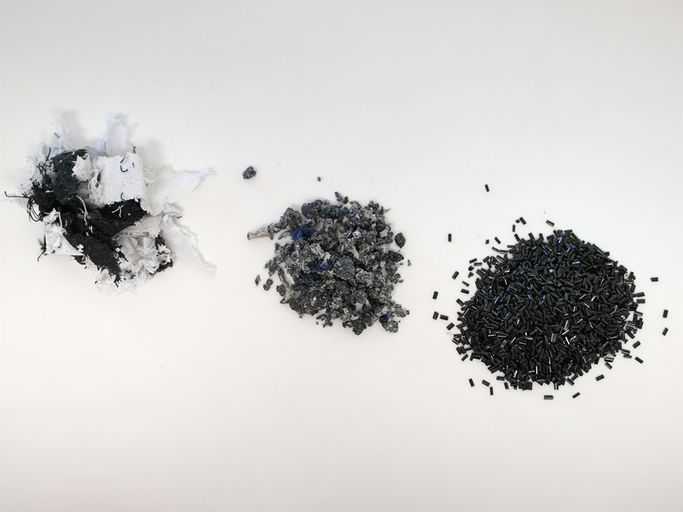
The claim to look for is textile-to-textile: fibre made from worn-out clothing and factory cuttings. Polyester, nylon and cotton-based versions are now made commercially, in small volumes.
 Cycora chemically recycled polyesterAmbercycleAmbercycle have developed a chemical recycling process that converts waste polyethylene terephthalate (PET), polyester, fibre and textiles into raw materials without any loss of quality.Image: Ambercycle
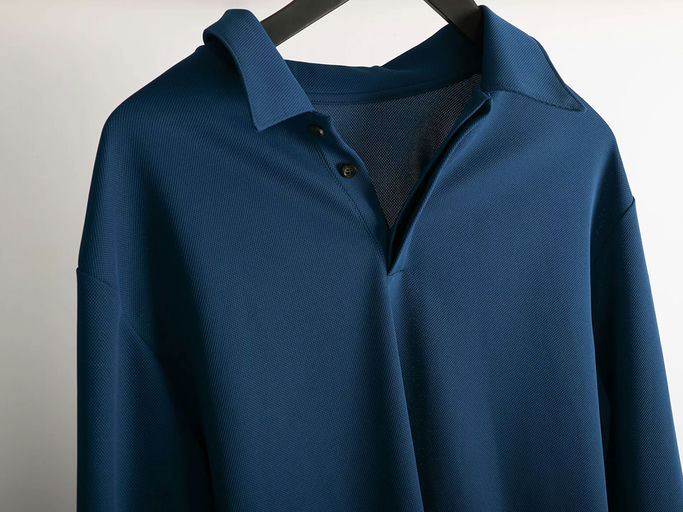 Syre chemically recycled polyesterSyre · In developmentBacked by H&M Group, Syre have developed a chemical recycling process to convert waste polyester (PET) textiles into new fibres. The polyester, derived from post-consumer waste and direct industry waste from factories, is depolymerised to make BHET, which forms the building block for new polyester fibre.Image: Syre
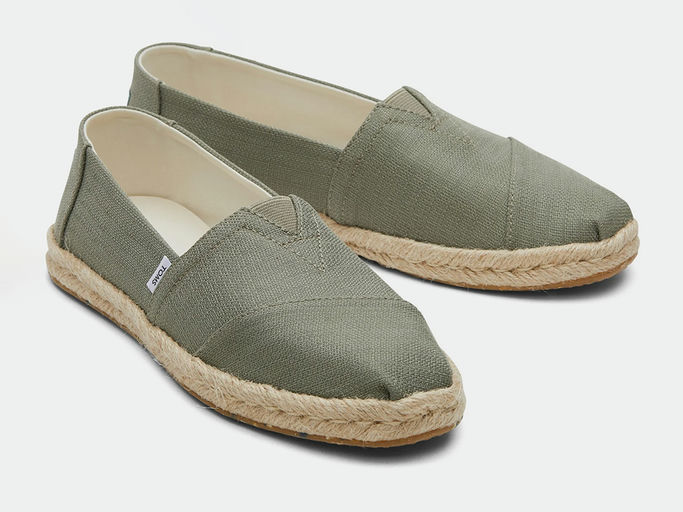 Tencel RefibraLenzingTencel Refibra regenerated cellulose textile combines recycled cotton waste from garment production (up to one third) and wood pulp sourced from sustainably managed forests to make new Tencel Lyocell fibre.Image: Lenzing
Sources: Just Style, on Textile Exchange's Materials Market Report 2025 · EU Textiles Ecosystem Platform, Materials market report 2025
Mass balance: recycled on paper
Chemical recycling turns waste plastic into an oil that is fed into a chemical plant together with fossil oil. The molecules mix, so nobody can say which product contains the recycled ones. Mass balance is the accounting that assigns the recycled input to chosen products.
A product sold as "50% recycled, mass balance" may contain little or no recycled material physically. What the claim says is that an equivalent amount of waste went into the system.
The EU gave this legal standing on 30 June 2026, for one case: chemically recycled content in single-use PET drinks bottles may count towards the EU's bottle targets, under a "fuel-use excluded" rule that stops material turned into fuel, or lost in the process, from being counted. The Commission has said it means to use the same approach elsewhere. Supporters say it is the only way to bring chemical recycling to scale; Zero Waste Europe and others say it allows recycled claims without recycled material.
What to ask: is the recycled content physically in the product (segregated) or allocated (mass balance), and which certificate covers it?
Sources: Commission Implementing Decision (EU) 2026/1425 · Renewable Carbon News, EU mass balance accounting rules revealed · Zero Waste Europe, press release (Feb 2026)
Rules and proof
From 1 January 2030, plastic packaging sold in the EU must contain a minimum share of post-consumer recycled plastic, averaged per factory and year: 30% for PET food-contact packaging and for single-use drinks bottles, 10% for food-contact packaging in other plastics, and 35% for everything else. The shares rise again in 2040.
Since 27 September 2026, EU consumer law also bans vague environmental claims that cannot be backed up. "Made with recycled materials" needs a figure and evidence behind it.
Certificates that give that evidence: the Global Recycled Standard and Recycled Claim Standard trace recycled material through the supply chain; ISCC PLUS covers mass balance; an EPD states the recycled share and the carbon figure together.
- 2025PET drinks bottles: 25% recycled plastic required
- 30 Jun 2026Mass balance accepted for chemically recycled PET in bottles
- 27 Sep 2026Vague green claims banned in the EU
- 1 Jan 2030Minimum recycled content in all plastic packaging
- 2040Minimums rise
- Packaging and Packaging Waste Regulation (EU) 2025/40
- Single-Use Plastics Directive (EU) 2019/904
- Global Recycled Standard (GRS)
- ISCC PLUS
- Environmental Product Declaration (EN 15804 / ISO 14025)
Sources: Faerch, PPWR overview and targets · European Commission, Single-use plastics · Nexio, What changes on 27 September 2026
Six questions for a recycled claim
- What percentage, and of what: the whole product, one part, or the packaging?
- Post-consumer or pre-consumer?
- Physically in the product, or allocated by mass balance?
- What was it before: bottles, textiles, fishing nets, car parts?
- Who certifies it?
- Can the product be recycled again afterwards, or is this its last life?
Then check the carbon. In the Material checker, the Recycled route shows the recycled version of a material where one exists, with the saving.
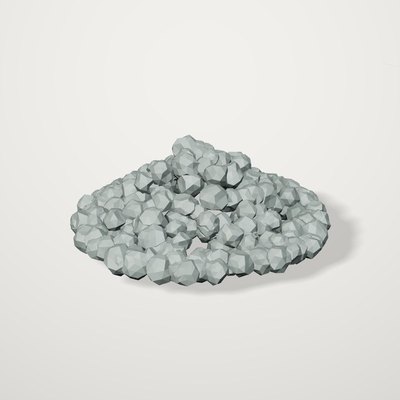 Lightweight aggregates
 Paper
 Polyvinyl butyral
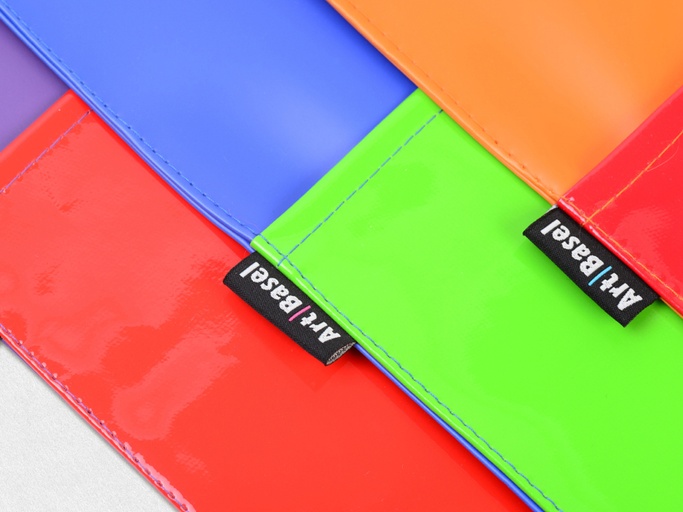 Polyvinyl chloride (PVC)
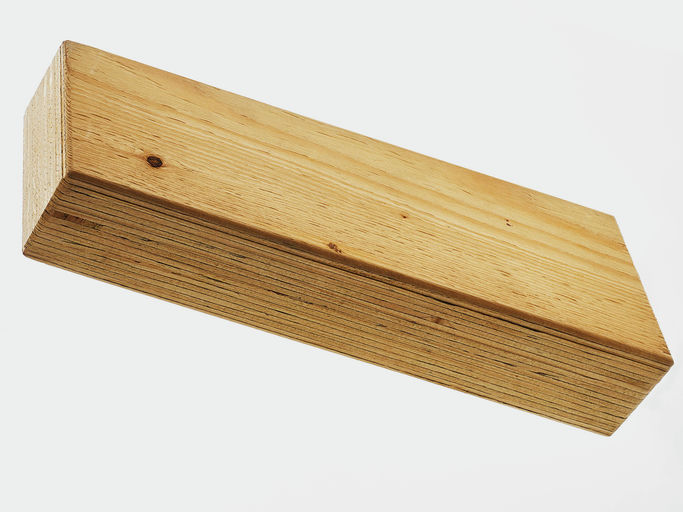 Engineered wood
 Polyethylene (PE)
 Carbon steel
 Wool
 Polystyrene (PS)
 Pigments & dyes
 Soda lime glass
 Alloy steel
 Cotton
 Thermoplastic polyester
 Thermoplastic polyurethane (TPU)
 Copper, Brass & Bronze
 Ethylene vinyl acetate (EVA)
 Polycarbonate (PC)
 Polypropylene (PP)
 Zinc
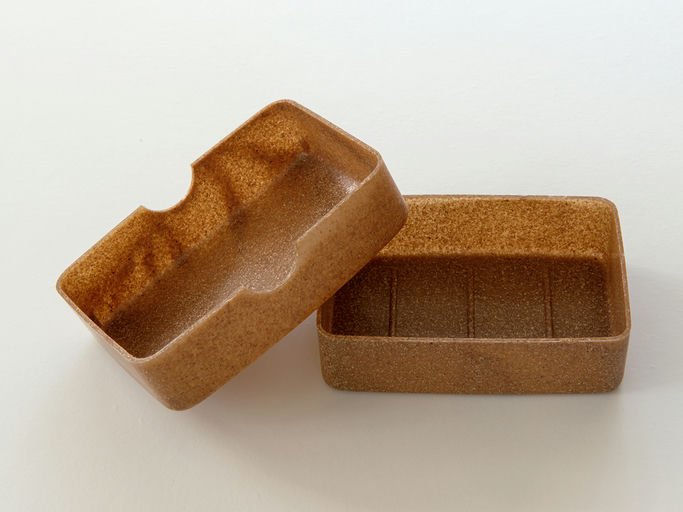 Lignin bioplastic
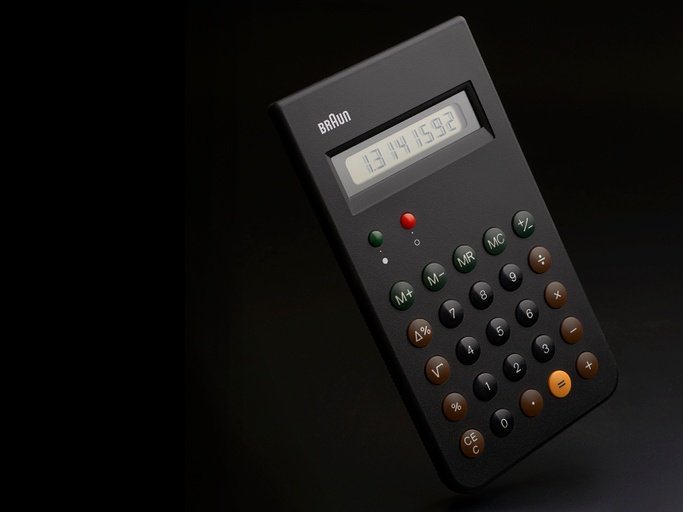 Acrylonitrile butadiene styrene (ABS)
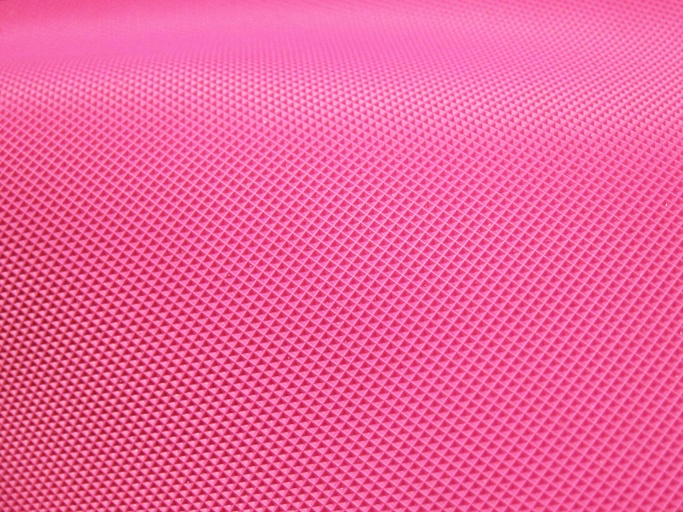 Polyurethane resin (PUR)
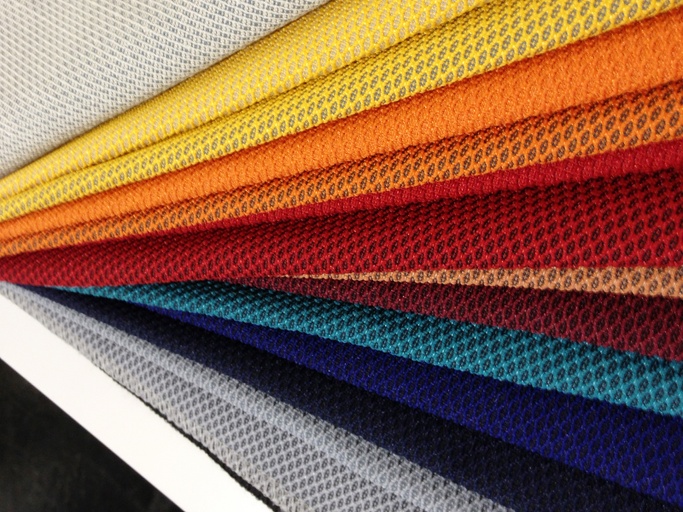 Polyamide fibre (PA)
 Stainless steel
 Polyamide (PA)
 Polyester fibre
 Regenerated cellulose
 Cellulose acetate (CA)
 Chitosan