Deep dive
How & why bioplastics break down
Every plastic is a long chain. Whether it breaks down, where and how fast comes down to the links in that chain and what is able to cut them. This guide looks at starch, PLA, PHA, seaweed and bio-based polyethylene at the scale of the molecule, and explains why compostable, biodegradable and bio-based are three different things.
- Five plastics compared
- What it takes
- Starch
- PLA
- PHA
- Seaweed
- Bio-based PE
- Three words
- On the label
- Carbon and cost
- How it was worked out
Five plastics compared
How long each takes to break down, from a thin part to a thick one. Choose a name to read more.
Four of the five break down, and one never does. The four share one thing: an oxygen atom in the backbone of the chain, joining each unit to the next. That oxygen link is where water or an enzyme can get a hold.
Bio-based polyethylene is made from plants too, but its backbone is carbon joined to carbon all the way along. Nothing in soil, water or compost can cut it.
The figures behind it
Carbon and cost are per kilo, from the Spot Material database. Each name opens the material in the checker.
| Plastic | The link that breaks | What cuts it | Where it breaks down | Carbon, kg CO2e per kg | Cost, USD per kg |
|---|---|---|---|---|---|
| Thermoplastic starchCorn, potato, wheat, cassava | Oxygen link between sugar rings | Water and enzymes | Soil, water, home compost | 0.5 to 2.5 | 2 to 5 |
| Polylactic acidFermented plant sugar | Ester link | Heat and water, then microbes | Industrial compost, at about 60 °C | 2.1 to 4 | 1.8 to 3 |
| PolyhydroxyalkanoatesMade by bacteria | Ester link | Enzymes from bacteria | Soil, water, home compost | 2 to 7 | 3 to 6 |
| Seaweed bioplastic (alginate)Brown seaweed | Oxygen link between sugar rings | Water and microbes | Home compost | 2.5 to 19 | 4.5 to 20 |
| Bio-based polyethyleneSugarcane | None: carbon joined to carbon | Nothing in soil, water or compost | Nowhere. It can be recycled | 1 to 2.4 | 1.5 to 3 |
What it takes to break a plastic down
Three things have to be true at once. Miss one and the plastic stays.
An oxygen link in the backbone: the ester link in PLA and PHA, or the link between sugar rings in starch and seaweed. A carbon to carbon backbone has none.
Either plain water, which is slow and needs heat, or an enzyme made by bacteria and fungi, which is fast but only fits chains that nature already knows.
Water and microbes work from the surface. A thin film is all surface. A thick wall takes far longer, and a hard, glassy plastic lets almost no water in.
What happens to the pieces. Cutting the chain is only the first half. The short pieces are then eaten by microbes, which turn them into water, CO2 and new biomass. That second half is what biodegradable means. A plastic that only crumbles into smaller bits of the same plastic has not biodegraded.
Starch
The quickest of the five, because it is food.
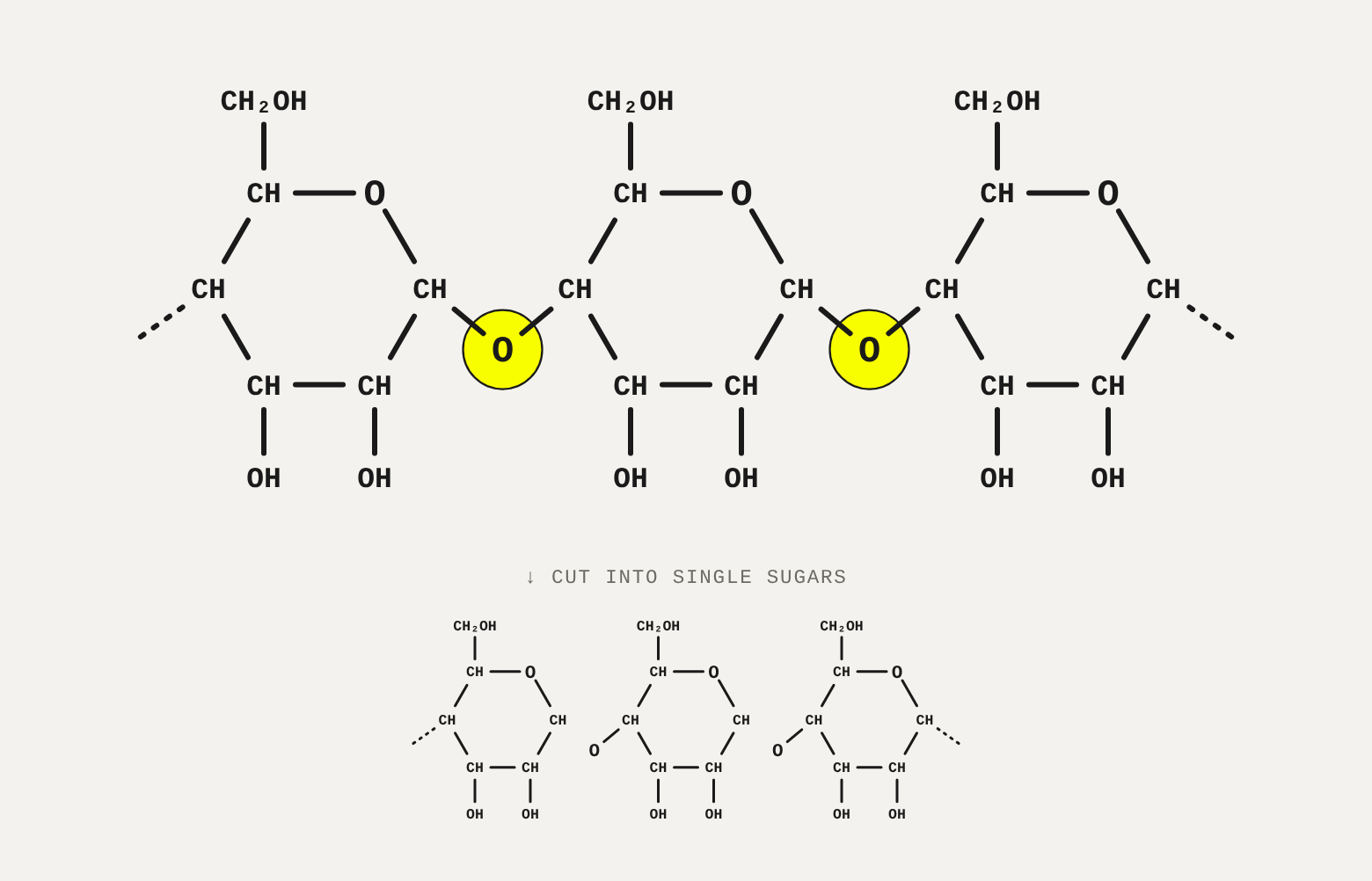
Starch is how plants store sugar: a chain of sugar rings, each joined to the next through a single oxygen. Most of the starch used in plastics comes from corn, wheat, cassava and potato.
Water gets into it easily, and bacteria and fungi everywhere carry the enzymes to cut the links, because starch is something they eat. It breaks down in most settings, including water, soil and compost.
That is also its weakness in use. On its own, starch plastic is brittle and vulnerable to water, heat and sunlight, so it is usually blended with a biodegradable polyester to make it tougher. Blending works the other way too: PLA on its own may be certified compostable up to about 1 mm thick, and PLA blended with starch up to about 1.5 mm.
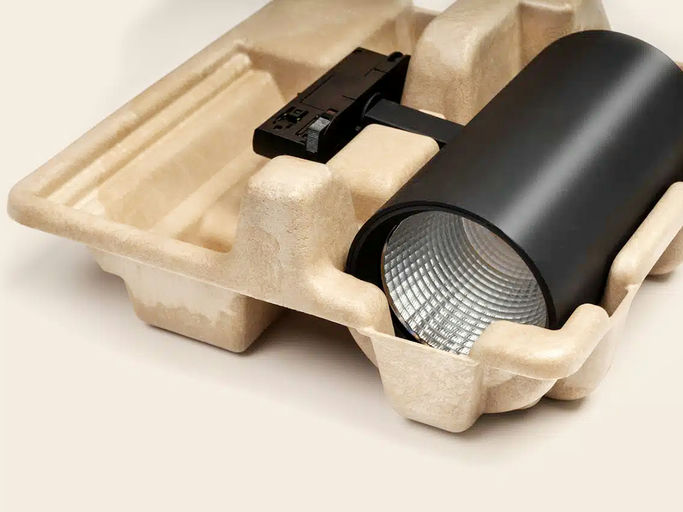
Starch and fibre foam packaging
PaperFoam is starch, natural fibres and water, foamed into a protective tray. It is certified OK compost HOME, and can also be recycled with paper.
Image: PaperFoam
See the innovation →PLA
Compostable, but only when it is hot.
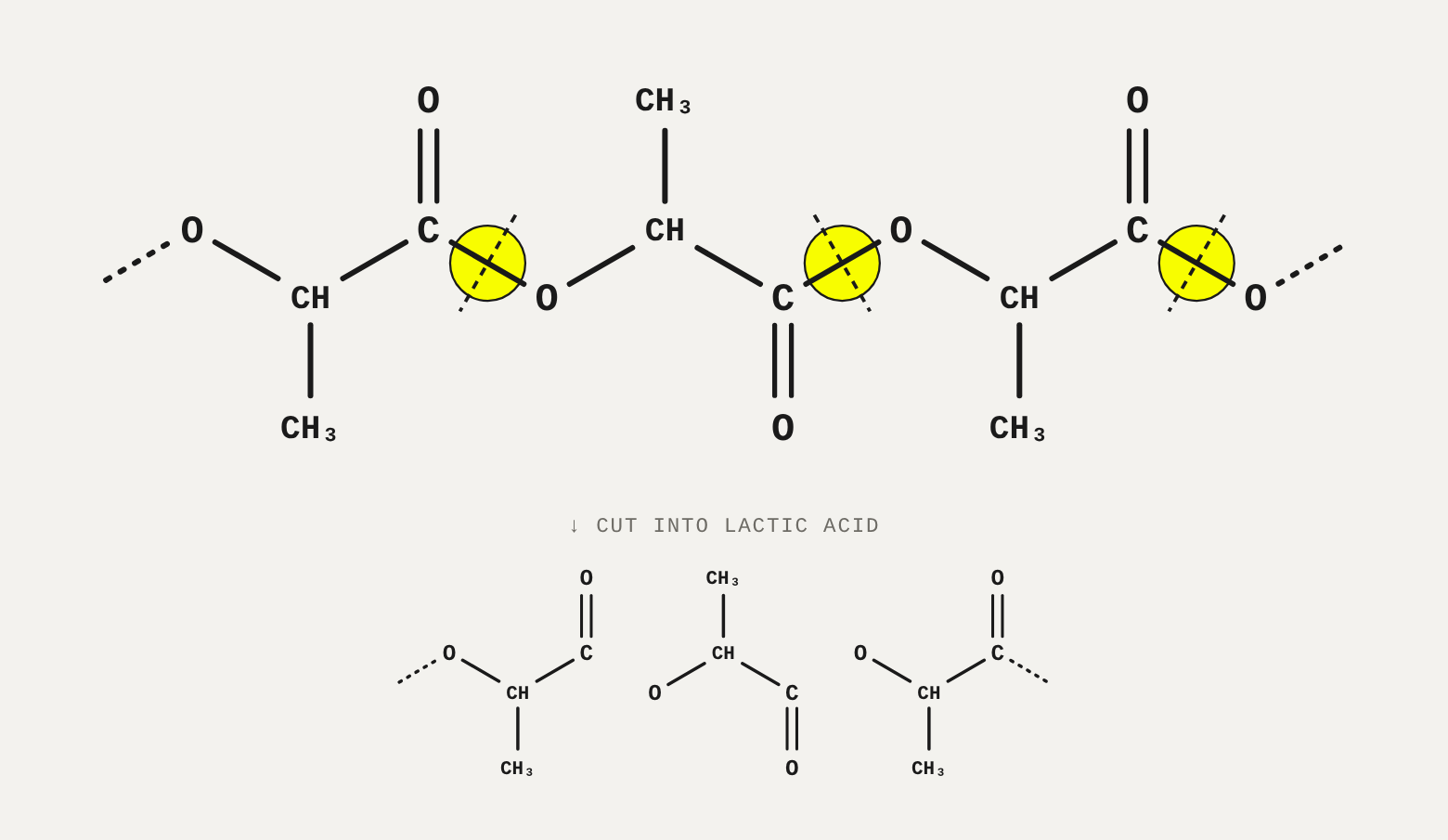
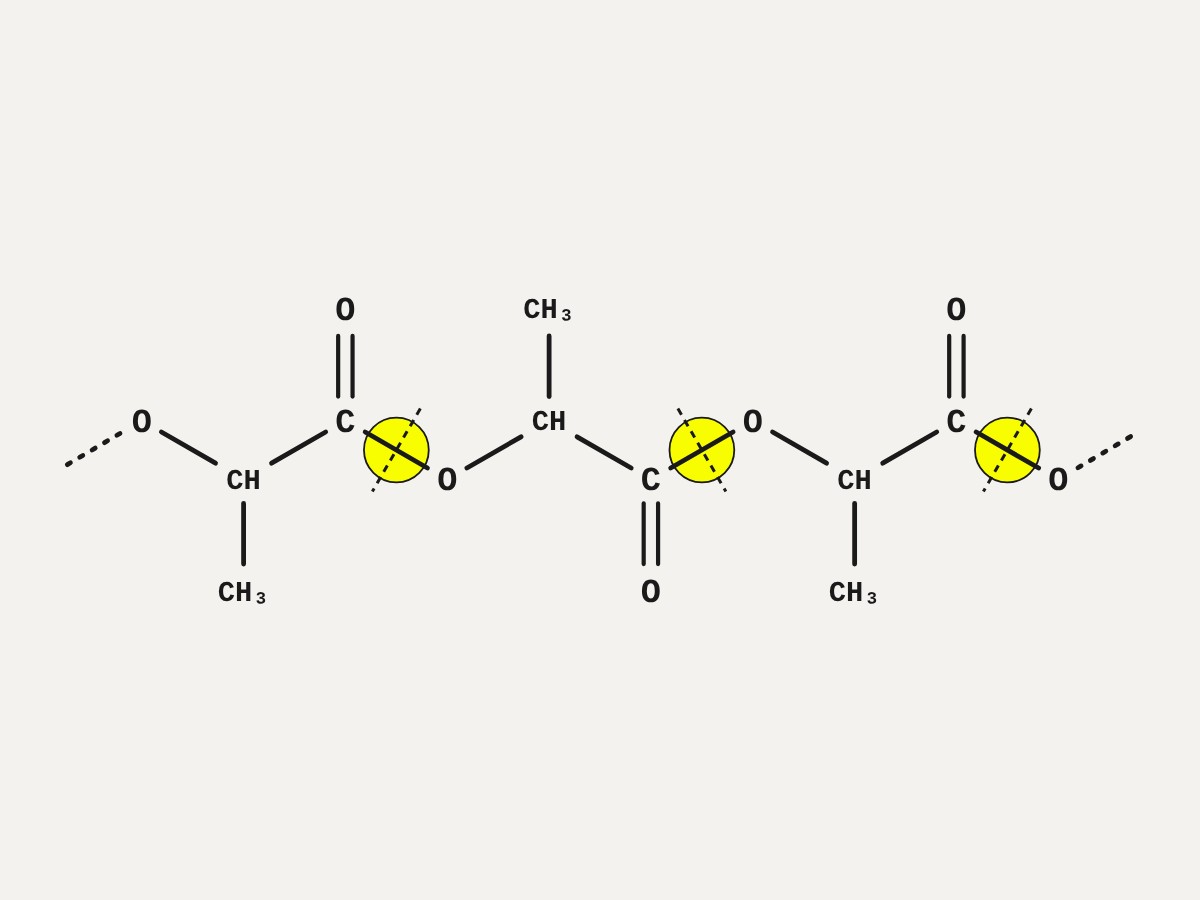
Polylactic acid is made by fermenting plant sugar into lactic acid, then joining the lactic acid into a chain. It makes up nearly half of all bioplastic production. The link that breaks is the ester link, once in every unit.
It breaks down in two steps. First the chains are shortened by water alone, with no help from microbes. Only when the pieces are short enough do microbes take over and eat them.
The first step needs heat. PLA starts to soften at about 55 °C. Below that it is hard and glassy, water barely gets in, and almost nothing happens. In an industrial composting plant at around 60 °C a thin-walled pot can break down within a month or so. In cold sea water, a thick PLA part will last many years.
Thickness decides the rest. To be certified compostable, biodegradable polyesters tend to be limited to parts less than 1 mm thick: films, thin-wall containers and single-use cutlery. A blow moulded bottle may still leave residue after 30 days at 60 °C, and take longer than the permitted time.
A way to speed it up. Adding a filler that absorbs moisture, such as wood fibre, carries water into the wall, so the breakdown starts through the whole thickness and not only at the surface.
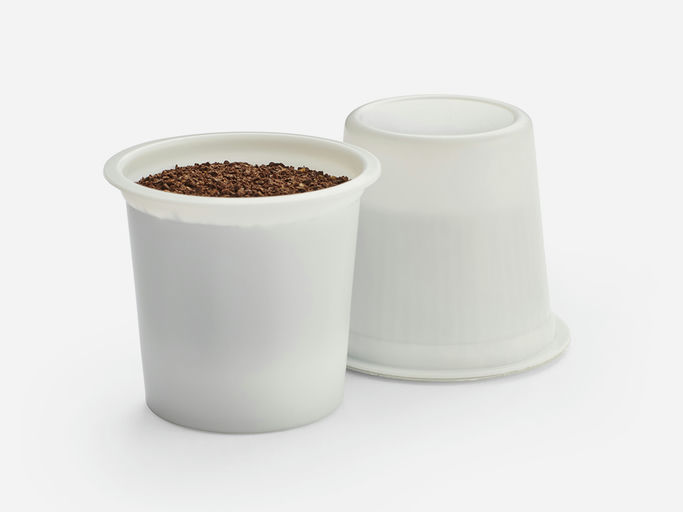
PLA coffee pods
Ingeo PLA by NatureWorks is certified compostable to EN 13432 and ASTM D6400, but only in industrial composting, which is not available everywhere. The company makes no home composting claim, and says each finished product must be tested separately.
Image: NatureWorks
See the innovation →PHA
The same link as PLA, and a very different result.
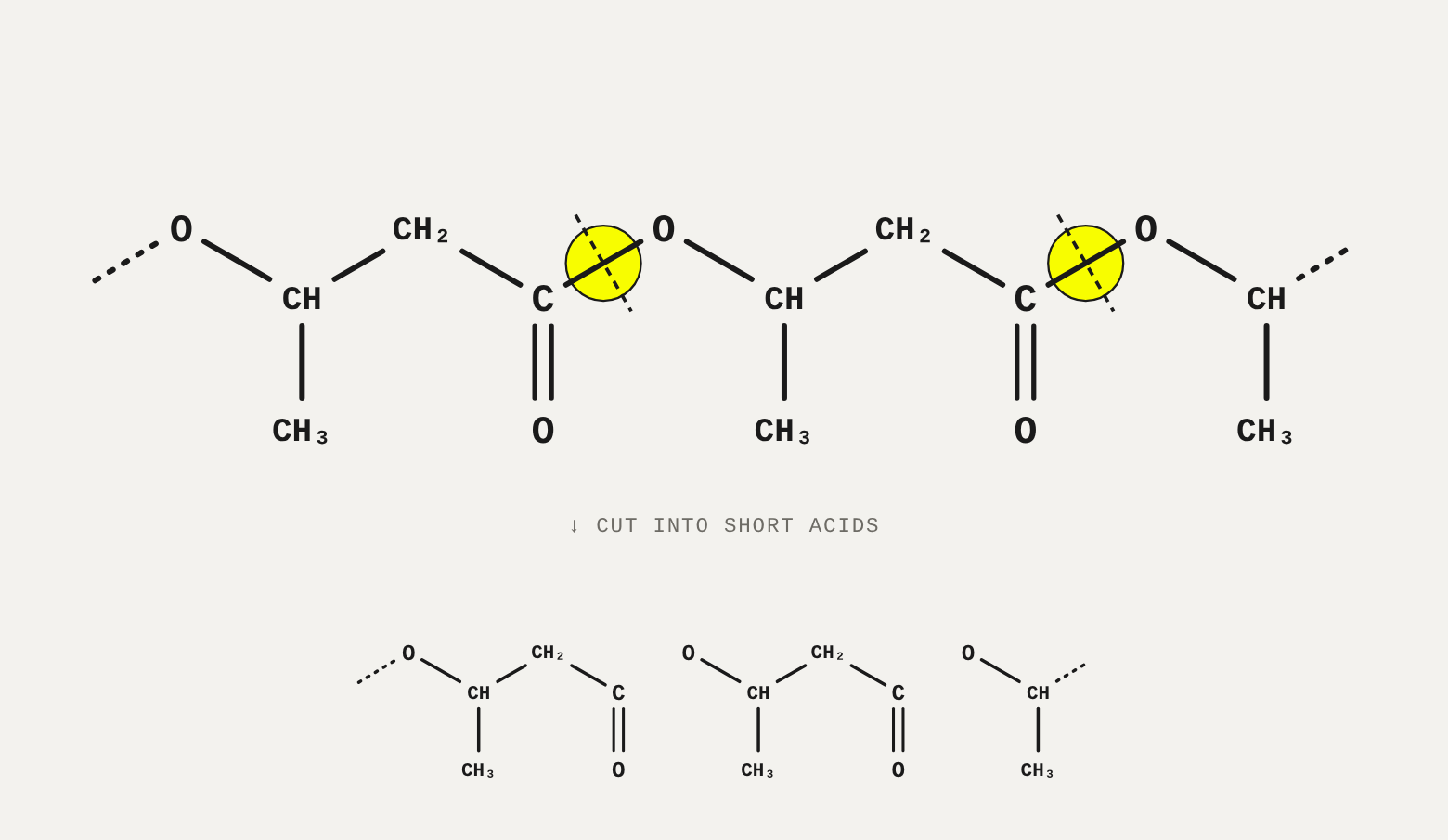
Polyhydroxyalkanoates are a family of polyesters made by bacteria, which build them up inside their cells as a store of food and energy. To make the plastic, the bacteria are fed on sugars, fats or even methane, and the PHA is collected.
The link that breaks is an ester link, the very same kind as in PLA. Yet PHA breaks down much more readily, and in soil and water as well as in compost, with no heat needed.
Same link, different cutter. The link is no weaker. What differs is what is around to cut it. Because bacteria make PHA to eat later, bacteria and fungi in soil and water carry enzymes shaped to grip that chain. An enzyme holds the chain in a pocket, brings a water molecule up against the link, and the link breaks. Then it moves along to the next one.
PLA has the same link, but its chain is a different shape, and it is not found in nature. Almost nothing carries an enzyme that fits it, so PLA has to wait for heat and plain water to do the cutting.
One limit. PHA breaks down in most settings, but not in landfill.
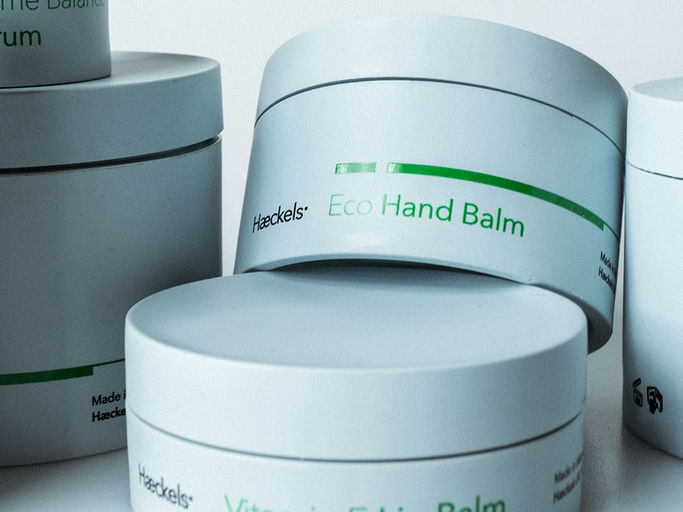
PHA cosmetics jars
Vivomer by Shellworks is made with the fat of microbes found in soil and sea, grown by fermentation into PHA. After use, the same microbes can eat it. The company describes it as home compostable, in about a year in a home compost heap. No compostability certificate for the finished material was found.
Image: Haeckels
See the innovation →Seaweed
A chain of sugars, like starch, held together with calcium.
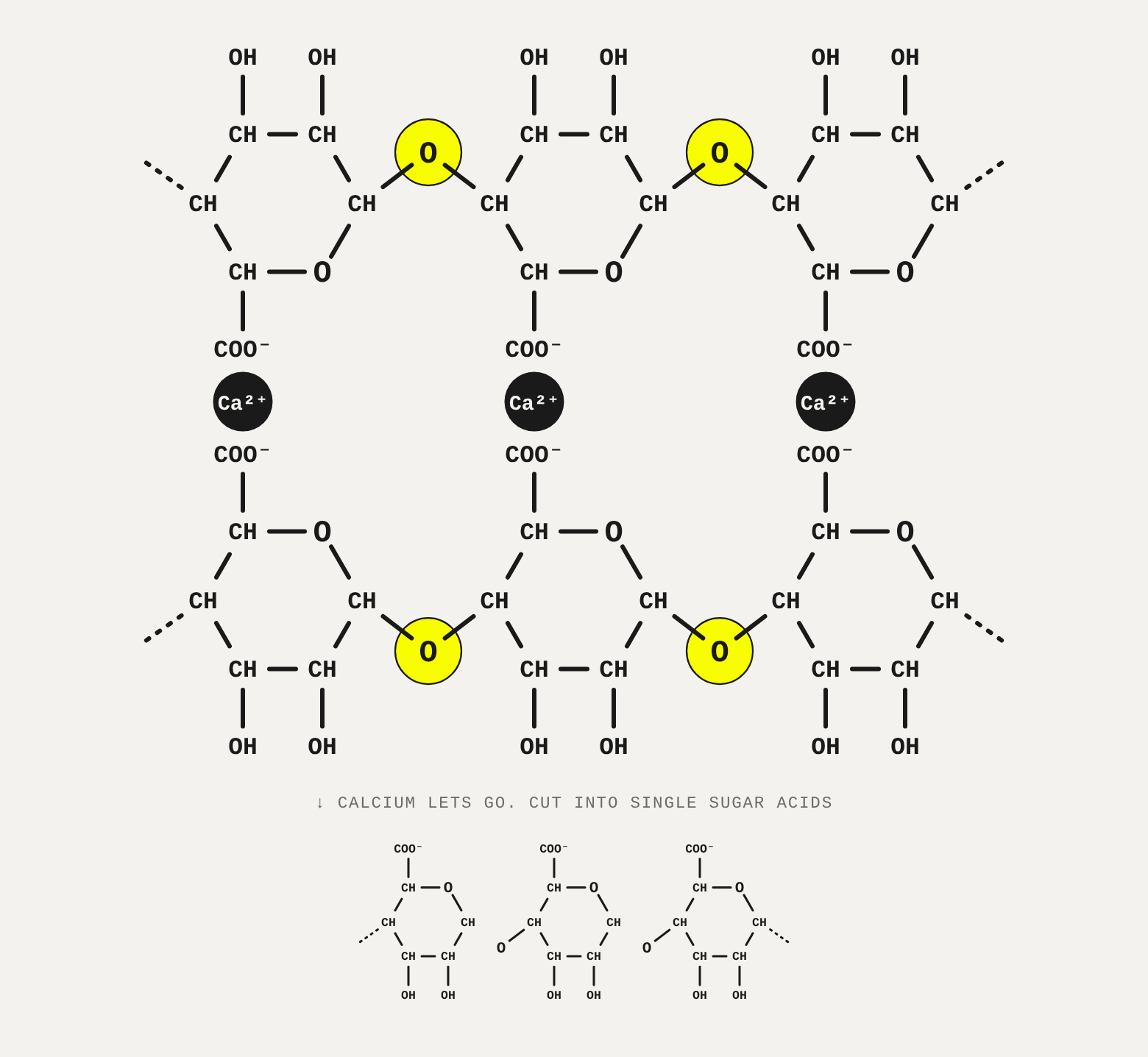
Seaweed plastics are made from the polysaccharides in seaweed: sugar molecules bonded together in long chains. The one drawn here is alginate, from brown seaweed. Its rings each carry an acid group, and calcium sits between the acid groups of two chains and holds them together. That is what turns a runny seaweed extract into a film.
Water loosens the calcium, the chains come apart, and microbes cut the oxygen links between the rings, as they do in starch.
Seaweed is easily cultivated without fertiliser, does not compete with food crops and needs no land. The films give a good barrier to moisture, oxygen and grease, which is why they are used to coat paper and card in place of a plastic lining.
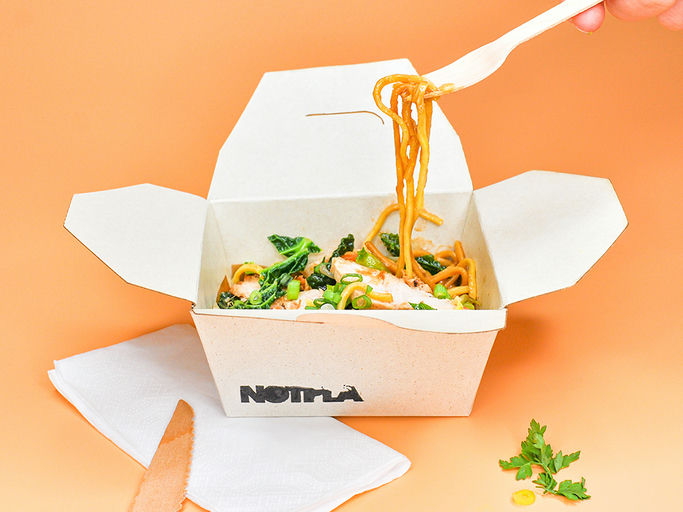
Seaweed coating on a paper box
Notpla coatings and films give paper packaging a barrier to water and grease without a plastic lining. After use the packaging can go in paper recycling, or be home composted.
Image: Notpla
See the innovation →Check seaweed bioplastic · See also Seaweed.
Bio-based PE
Made from plants. Does not break down.
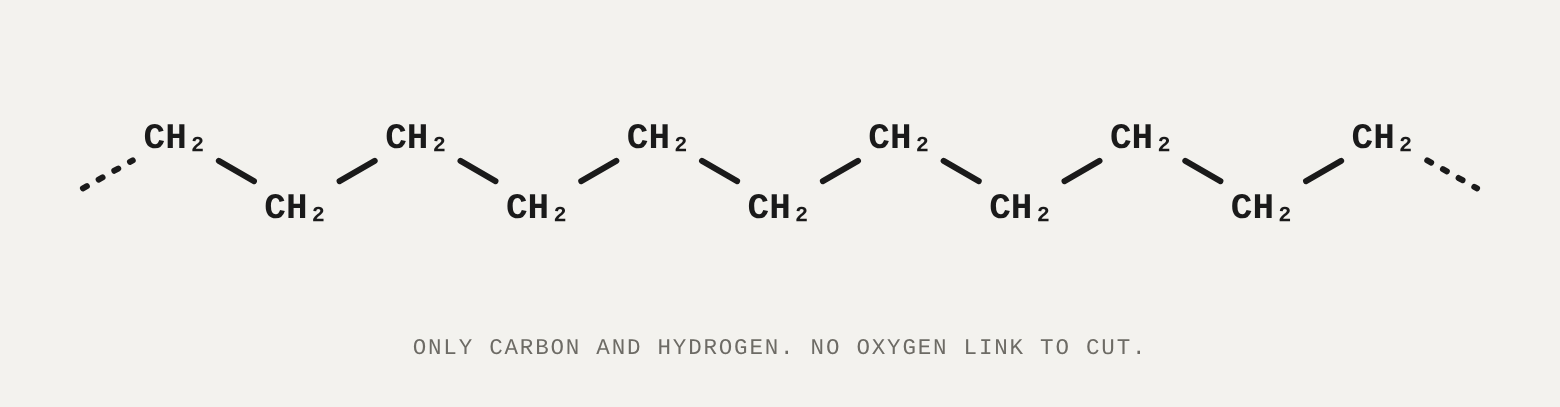
Bio-based polyethylene is made from ethanol, which comes from sugarcane. The plant origin changes where the carbon came from. It does not change the molecule, which is the same as oil-based polyethylene: a backbone of carbon joined to carbon, with hydrogen on each one, and no oxygen link anywhere.
So it is not biodegradable, and it can be recycled together with ordinary polyethylene. That is a real advantage: it is a drop-in replacement for the most widely used plastic in the world, and it keeps the carbon the plant took up locked in for as long as the material stays in use.
Three words that are not the same
Bio-based is about where a plastic comes from. Biodegradable is about where it goes. Neither tells you the other.
Starch, PLA, PHA and seaweed plastics.
Bio-based polyethylene. Made from sugarcane, the same molecule as oil-based PE.
PBAT, the flexible plastic in most certified compostable bags, mulch film and food-waste liners. It is fossil-based, and it composts.
Ordinary polyethylene, polypropylene and most other plastics.
Compostable is the narrowest of the three words. It means biodegradable within a set time under set conditions, and proven by test. A plastic can be biodegradable and still fail to be compostable, simply because the part is too thick to finish in time.
Check compostable film compound · Bio-based plastics · Compostable materials
What compostable means on a label
- It is a test, not a description. To be certified compostable, a product must break down into water, CO2 and biomass at a rate consistent with other biomaterials, and leave no harmful effect on the finished compost, which is checked by eco-toxicity testing.
- It applies to the product, at its thickness. A material that passes as a film can fail as a bottle.
- Industrial and home are different claims. Industrial composting runs hot, at around 60 °C. A home compost heap does not. PLA needs the heat; starch, PHA and seaweed plastics mostly do not.
- Landfill is the wrong place. Deprived of oxygen, biodegradable plastics in landfill may release methane, which is much more harmful than CO2.
- So is the plastics recycling bin. Compostable film contaminates polyethylene film recycling if it is mixed in.
Labels to look for, and rules to check:
- EN 13432 industrial composting
- Home compostable
- USDA BioPreferred
- EU packaging regulation
- EU single-use plastics
- EU food contact materials
Carbon and cost
Breaking down is one measure. These are two more, per kilo of material, with ordinary polyethylene for comparison.
Carbon to produce, kg CO2e per kg
Cost, USD per kg
None of these is a low-carbon shortcut. Starch and bio-based polyethylene come in a little under ordinary polyethylene per kilo, and PLA and PHA a little over. All of them cost more, most at least twice as much. Seaweed plastics have the widest range, because they are still made in small amounts by very different processes.
These figures do not count the CO2 that the plant took up as it grew. Figures that do count it are lower, sometimes below zero, but that CO2 returns to the air when the material is burned or breaks down.
How it was worked out
- Carbon and cost are the ranges in the Spot Material database on 25 November 2026, per kilo of material. Bars are drawn at the middle of each range.
- From the database: the two-step breakdown of PLA, its softening point, the month or so for a thin pot in industrial composting, the many years in sea water, the 1 mm and 1.5 mm thickness limits, the effect of wood fibre, and where each plastic does and does not break down.
- From the makers: the claims on the four example products, as each company states them.
- General polymer chemistry, not database figures: how an enzyme cuts a chain, why PHA is cut faster than PLA, and the role of calcium in alginate.
- The time chart is an estimate. Only three points on it are sourced: thin PLA in industrial compost, PLA in cold sea water, and the thick PHA jar. The rest are placed by judgement, to show the order and the effect of thickness. Real times vary widely with temperature, moisture and the exact blend.
- The drawings are simplified. Rings are drawn flat, hydrogens are written with the atom they sit on, and the small drawings of the pieces show where the chain parts, not the exact ends of the finished molecules.
Have a material in mind?
The checker shows its carbon, its concerns and what you could use instead, for more than 800 materials or every part of a product at once.