Topic

Seaweed materials

Films, coatings, foams and fibres made from seaweed and algae: what they are, how they rate and who is making them.

Seaweed materials

Trend briefing

Seaweed materials: what the kelp?

Seaweed grows fast without land, fertiliser or fresh water, and its natural gelling polymers can make coatings, films, foams and fibres. A small group of start-ups is turning it into packaging and textiles that take plastic out of everyday products. Here is what works, what is still early and what to check.

15grades in 4 families
1.5median kg CO₂e/kg
100%tagged renewable
63company innovations

Live from the Spot Material database · figures updated 23 Nov 2026 · text last edited 18 Nov 2026

In short

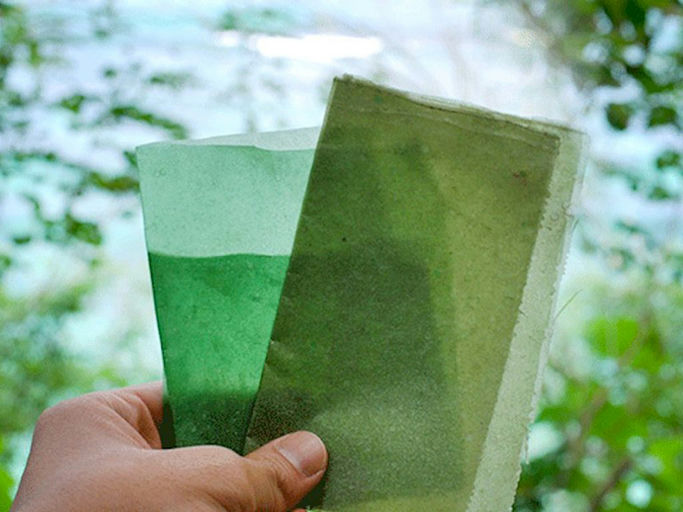
Seaweed materials are built on natural polymers: alginate from brown algae, and agar and carrageenan from certain red algae. Already used as thickeners and gelling agents in food and cosmetics, they can also form coatings and films, much like synthetic plastics.

The most proven use is a plastic-free barrier coating on paper and board. Films, rigid parts, fibres and foams are coming, but most are early. The database holds two seaweed grades, a seaweed bioplastic and a barrier coating for paper and board, so live figures here cover seaweed with its natural-polymer neighbours: starch, moulded pulp and regenerated cellulose (15 grades in 4 families).

Grown without land, fertiliser or fresh water

As a feedstock, seaweed needs no fertiliser, does not compete with food crops for land, carries no deforestation risk and takes up carbon as it grows.

It is already farmed at scale: about 37.8 million tonnes of algae in 2022, mostly from aquaculture in Asia, led by China and Indonesia. Almost all of it goes into food and ingredients such as agar, so materials are a small new market competing for the same harvest. And done badly, intensive farming at large scale can harm coastal ecosystems.

Sources: FAO GLOBEFISH, seaweed analysis

What it replaces, and a carbon gap

Seaweed materials mostly replace thin films, coatings and small single-use items, so the chart sets natural-polymer alternatives against the plastics they compete with. Moulded pulp is 1.29 kg CO₂e/kg and starch foam 1.15 kg CO₂e/kg, against 2.6 kg CO₂e/kg for LDPE film and 2.75 kg CO₂e/kg for polystyrene.

The seaweed grades are left out on purpose: the seaweed bioplastic figure is under review and there is no published value for the coating yet. Few seaweed companies publish verified LCAs, so treat carbon claims with care.

Carbon footprint, raw material to factory gate (kg CO2e per kg)

13Paperfoam (starch foam)1.15Moulded pulp1.29Thermoplastic starch1.5Cellophane3.5BOPP film2.3PET2.5LDPE film2.6High-impact polystyrene2.75
Natural-polymer alternativesPlastics they replaceDot = typical, line = range · log scale

Coatings that take the plastic out of paper

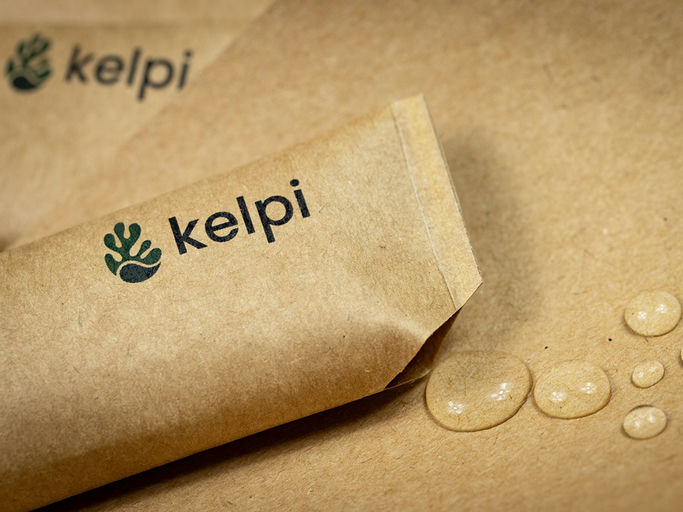
Most food-grade paper needs a grease and water barrier, usually a laminated plastic film, a polymer dispersion or PFAS. Notpla, in the UK, coats takeaway boxes with seaweed and plant extracts instead. In November 2023 the Dutch government recognised Notpla-coated board as plastic-free under the Single-Use Plastics Directive, because its natural extracts are not chemically modified.

Kelpi (UK) and Zerocircle (India) make seaweed-coated papers too. Prices are roughly comparable to other high-quality paper packaging, which makes this the easiest switch here.

Sources: Packaging Insights, Notpla plastic-free recognition

Films, bags, rigid parts and edibles

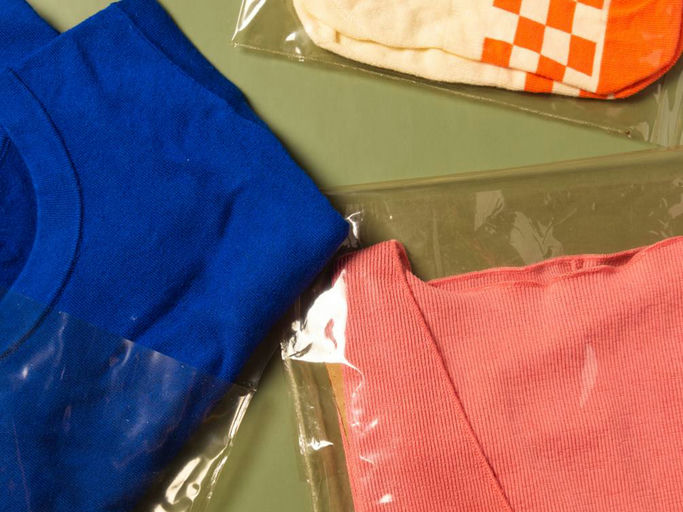
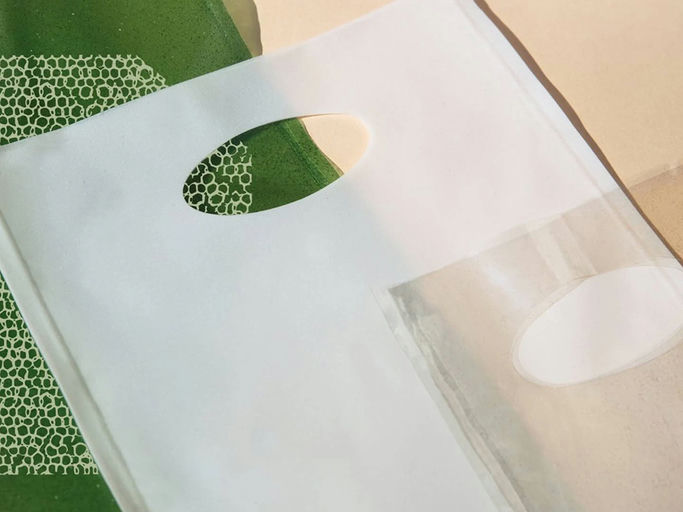
Replacing a plastic film outright is harder. Sway (US) makes TPSea, a seaweed resin that runs on existing film lines; its compostable mailers have been piloted by prAna and Faherty, and in late 2024 Sway and Umaro won a US$1.5 million Department of Energy grant. Notpla Rigid, launched in 2024, starts with cutlery, and Algopack (France) makes seaweed bioplastics and blends.

Edible films and pods only make sense if no extra plastic outer pack is needed: the system matters as much as the material. Not every pioneer has made it, either; Spotlight lists Evoware's edible film and Loliware's straws as status unclear.

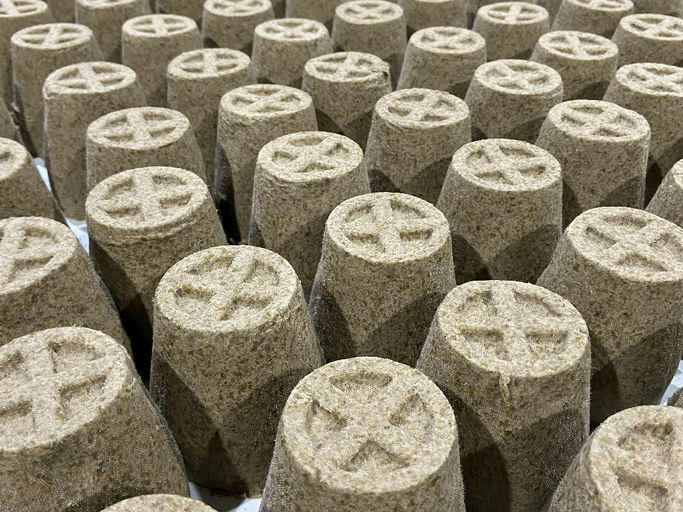
Sway seaweed packagingSwaySway makes seaweed-based packaging as a compostable alternative to packaging plastics such as polypropylene (PP), polyethylene (PE) and polyethylene terephthalate (PET), polyester.Image: SwayNotpla Rigid seaweed utensilsNotplaNotpla rigid is a seaweed-based material that can be moulded into utensils, such as forks and ice cream spoons. Notpla says it is home compostable and biodegradable, like fruit peel, but no third-party compostability certificate has been found. Image Notpla.Image: NotplaAlgopack seaweed bioplasticAlgopackAlgopack produce biodegradable products from brown seaweed, as well as Algoblend, a blend of seaweed with oil-based plastics aimed at durable products, to help reduce the carbon footprint of products. Algopack describes its 100% seaweed material as biodegradable. Image Algopack.Image: AlgopackLoliware seaweed straws and seaweed resin utensilsLoliwareLoliware is a San Francisco company, founded in 2016, that makes single-use products from seaweed. It began with edible cups and then seaweed drinking straws, and in 2023 launched a seaweed-based resin that runs on standard plastic injection-moulding machines, starting with a set of cutlery.Evoware edible seaweed filmEvowareEvoware, a company in Jakarta, Indonesia, makes edible seaweed-based film and packaging, including sachets, wrappers and edible cups. The company describes the material as biodegradable and compostable, but no compostability certificate or home-composting claim specific to the film has been found. Image Evoware.Image: EvowareKelp Pots seaweed seedling pots by Ocean MadeOcean MadeKelp Pots are moulded seedling and plant pots made by Ocean Made of Seattle, USA, from kelp cellulose blended with organic matter, with no glues or artificial binders.Image: Ocean Made

Sources: Packaging Strategies, Sway and Umaro DOE grant

Fibres, foams, inks and design

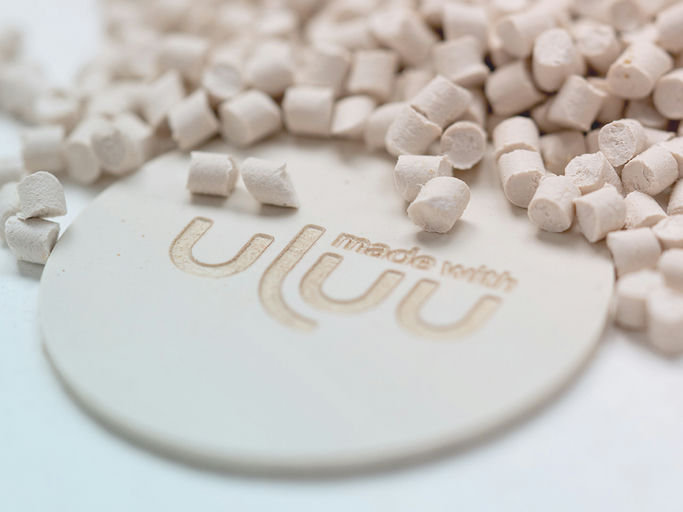
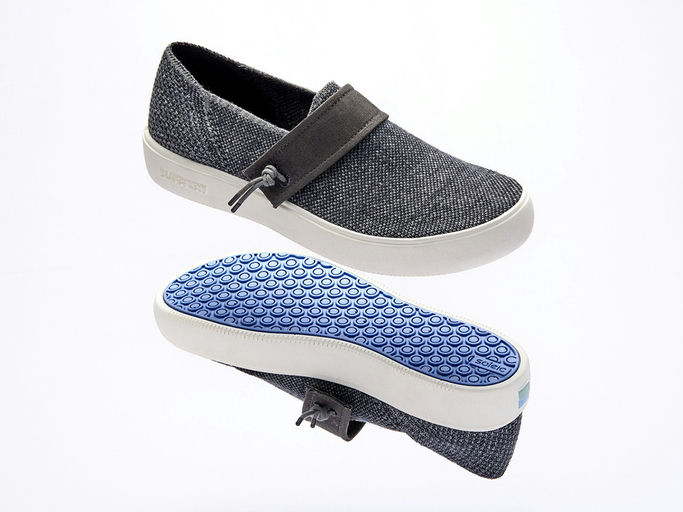
Keel Labs (US) spins Kelsun, a kelp-based fibre that competes with viscose (3.5 kg CO₂e/kg). Agoprene (Norway) is developing a seaweed foam for fashion and furniture, and Revoltech's MATTR is an algae-based leather alternative. Uluu (Australia) feeds seaweed to microbes to make PHA; Oceanium (UK) makes seaweed ink, Zeefier (Netherlands) textile dyes, and Algenesis (US) a partly algae-based polyurethane for soles.

Designers got there first: Julia Lohmann's Department of Seaweed at Aalto University and Jessie French's Other Matter show qualities a datasheet misses, such as translucency, colour and ageing. Performance data is still thin, so compare durability as well as carbon.

Fibres and films they compete with (kg CO2e per kg)

13Cellophane3.5Viscose3.5LDPE film2.6PET2.5
Natural-polymer alternativesPlastics they replaceDot = typical, line = range · log scale
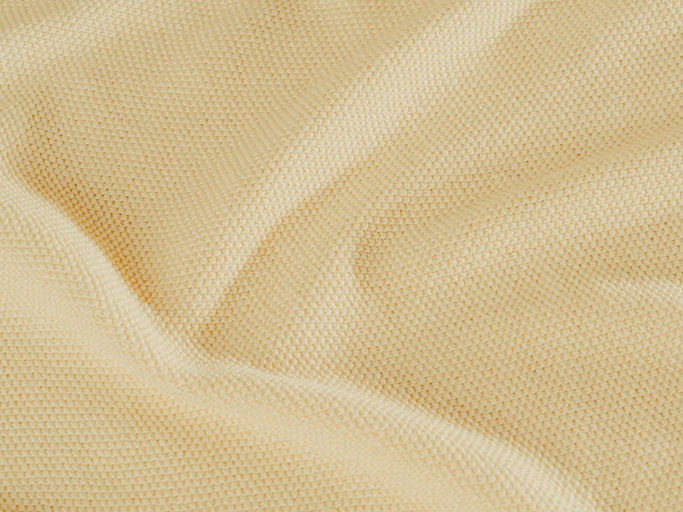
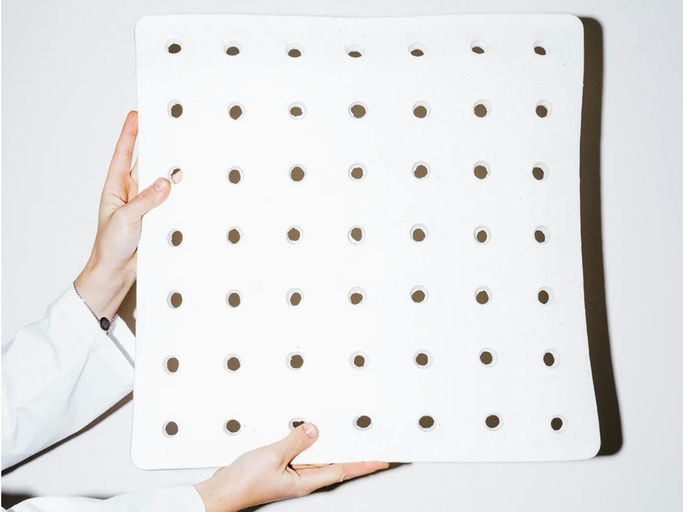
Kelsun seaweed textile by Keel LabsKeel Labs · In developmentKelsun by Keel Labs is a textile fibre based on seaweed bioplastic. It is made with over 75% kelp, which goes through an extraction process to isolate the biopolymer. It is combined with proprietary additives to make it look and feel like a fashion textile, and spun into filaments.Image: Keel LabsAgoprene seaweed foamAgoprene · In developmentAgoprene seaweed foam is primarily made up of ingredients derived from Norwegian kelp, but also some minerals from crab shells and waste from the Norwegian paper industry.Image: AgopreneMATTR algae-based leather alternative by RevoltechRevoltech · In developmentMATTR is a flexible, leather-like sheet material from Revoltech, a spin-off of the Technical University of Darmstadt in Germany. It has two layers: a top layer made mainly from fast-growing red algae with plant-based additives, on a cellulose textile backing. Red algae need no farmland, fertiliser or fresh water.Uluu polyhydroxyalkanoates (PHA), biodegradable polyesterUluu · In developmentUluu polyhydroxyalkanoates (PHA), biodegradable polyester, is produced using farmed seaweed feedstock, converted by fermentation.Image: UluuSoleic partially bio-based and biodegradable polyurethane resin (bio-PUR) by AlgenesisAlgenesisSoleic partially bio-based and biodegradable polyurethane (bio-PUR) by Algenesis is a polyurethane system, first launched as foam, for uses such as shoe cushioning, bedding, building insulation, surfboards and automotive parts. The monomers are created from algae oil and engineered to biodegrade.Image: AlgenesisOther Matter algae-based bioplasticOther MatterOther Matter is an experimental design studio set up by Jessie French offering algae-based bioplastic products, objects, screens and decals. Decals made with seaweed provide an alternative to the conventional polyvinyl chloride (PVC) used for shops, signage and exhibitions; they stick without petrochemical adhesives.Image: Other Matter

What to look out for

Price is the biggest barrier: seaweed materials can't yet match PET, polyester or polystyrene, though that ignores plastic's hidden costs, which WWF has estimated at around ten times its market price. Notpla raised £20 million in 2024 to expand, which shows both the momentum and the cost of scaling.

Also check for marine contaminants such as heavy metals, especially for food contact, and for verified carbon data. The chart shows the concerns tagged on the natural-polymer grades covered here.

Concerns tagged on the natural-polymer grades in this briefing (number of grades)

Deforestation risk
7
Raw material generates polluting by-products
4
Forever chemicals
1
Potentially toxic in use
1

Out of 15 grades.

Sources: Notpla, £20m funding (Sept 2024)

After use

End of life is seaweed's big promise: most seaweed materials are made to compost at home or break down in nature, and coated paper can stay in the paper stream. 73% of the grades covered here are tagged home compostable. Check certificates rather than taking "biodegradable" on trust: since September 2026, EU law bans generic claims like that without recognised proof.

Biodegradable
15
Industrially compostable
12
Home compostable
11
Recycle
9
Circular
4

Grades tagged with each end-of-life route, out of 15.

Rules and labels

Two definitions matter most. Under the Single-Use Plastics Directive, an unmodified natural polymer is not plastic, so pure seaweed coatings can be sold as plastic-free while blends with bioplastics cannot. Under the PPWR, packaging has to be recyclable or, for a few formats, compostable. These are the rules and labels most often linked to the grades covered here:

How to choose

Five questions before you specify seaweed:

  • Could a coating on paper or board do the job? It is the most proven option and closest to price parity.
  • Is it unmodified seaweed (plastic-free) or a blend with bioplastic?
  • Are there compostability certificates and food-contact tests, including heavy metals?
  • Does the system work: no extra plastic layers, and a real end-of-life route where it is sold?
  • Can the supplier deliver your volumes, and what is your fallback?

Then test the swap in the Material checker, starting from a plastic film.

Check LDPE film in the Material checker

The short version

Bio-based plastics produced from seaweed have the potential to replace conventional plastics in many applications, in particular packaging. Cast as transparent films, they offer a renewable and compostable alternative to plastics such as polypropylene (PP), polyethylene (PE) and polyethylene terephthalate (PET), polyester.

Seaweed-based biopolymers include alginate, agar and carrageenan. These are polysaccharides made up of sugar molecules bonded together in long chains. There are many types of seaweed and several of them are suitable for bioplastic production. Each has its own qualities and benefits, such as providing an effective barrier, water solubility, printability, or thermoplastic properties.

As well as providing raw materials for bio-based plastics, they are used as thickeners, gelling agents and stabilisers in cosmetics and food products. Indeed, it is possible to make edible bioplastics from these ingredients.

Full check for seaweed bioplastic →
How it rates

2 types in the database. Carbon is per kilogram of material, so thin films and light foams go a long way.

Bio-based plastic

Very high carbon 12.3 kg CO₂e/kg

Seaweed based bioplastic films - typically a composite such as calcium alginate (Ca-Alg2) or mixed with cellulose, starch and glycerol - provide a good barrier to moisture, oxygen and CO2 in packaging applications.

Check this material →

Barrier coating for paper and board

Very high carbon 12.3 kg CO₂e/kg (estimate)

Seaweed-based coatings are thin water- and grease-resistant layers applied to paper and paperboard in place of a polyethylene (PE) or PLA lining or a PFAS grease-proofing treatment.

Check this material →

Rules and certifications to check

What applies to these materials or is available for them. Last checked 28 October 2026.

Have a material in mind?

The checker shows its carbon, its concerns and what you could use instead, for more than 800 materials or every part of a product at once.

Who is making it

19 commercial materials from the database. Listed for reference, not rated.

Agoprene seaweed foamAgoprene seaweed foam is primarily made up of ingredients derived from Norwegian kelp, but also some minerals from crab shells and waste from the Norwegian paper industry.Image: AgopreneAlgopack seaweed bioplasticAlgopack produce biodegradable products from brown seaweed, as well as Algoblend, a blend of seaweed with oil-based plastics aimed at durable products, to help reduce the carbon footprint of products.Image: AlgopackEvoware edible seaweed filmEvoware, a company in Jakarta, Indonesia, makes edible seaweed-based film and packaging, including sachets, wrappers and edible cups.Image: EvowareKelp Pots seaweed seedling pots by Ocean MadeKelp Pots are moulded seedling and plant pots made by Ocean Made of Seattle, USA, from kelp cellulose blended with organic matter, with no glues or artificial binders.Kelpi seaweed-based packagingKelpi produce a leakproof seaweed-based coating that is resistant to water and oil. It is designed to replace fossil-based plastic linings in paper and card packaging, and has been used on refill sachets for the cleaning brand Homethings.Image: KelpiKelsun seaweed textile by Keel LabsKelsun by Keel Labs is a textile fibre based on seaweed bioplastic. It is made with over 75% kelp, which goes through an extraction process to isolate the biopolymer.Image: Keel LabsLoliware seaweed straws and seaweed resin utensilsLoliware is a San Francisco company, founded in 2016, that makes single-use products from seaweed.MATTR algae-based leather alternative by RevoltechMATTR is a flexible, leather-like sheet material from Revoltech, a spin-off of the Technical University of Darmstadt in Germany.Notpla Rigid seaweed utensilsNotpla rigid is a seaweed-based material that can be moulded into utensils, such as forks and ice cream spoons.Image: NotplaNotpla seaweed packagingNotpla are compostable seaweed based paper coatings and packaging films that provide a plastic-free barrier to water and grease. After use, the packaging can be disposed in paper recycling, or home composted.Image: NotplaOcean Ink seaweed ink by OceaniumOcean Ink is a water-based ink for artists made by Oceanium, a UK seaweed biorefining company, from farmed North Atlantic sugar kelp (Saccharina latissima).Other Matter algae-based bioplasticOther Matter is an experimental design studio set up by Jessie French offering algae-based bioplastic products, objects, screens and decals.Image: Other MatterSearamic seaweed and nanoceramic coating and additive for fabricSearamic by Soarce, a bio-based colour additive and coating, is made up of 50-80% seaweed cellulose biopolymer combined with natural clays (ceramic particles).Image: SoarceSoleic partially bio-based and biodegradable polyurethane resin (bio-PUR) by AlgenesisSoleic partially bio-based and biodegradable polyurethane (bio-PUR) by Algenesis is a polyurethane system, first launched as foam, for uses such as shoe cushioning, bedding, building insulation, surfboards and automotive parts.Image: AlgenesisSway seaweed packagingSway makes seaweed-based packaging as a compostable alternative to packaging plastics such as polypropylene (PP), polyethylene (PE) and polyethylene terephthalate (PET), polyester.Image: SwayUluu polyhydroxyalkanoates (PHA), biodegradable polyesterUluu polyhydroxyalkanoates (PHA), biodegradable polyester, is produced using farmed seaweed feedstock, converted by fermentation.Image: UluuXylem and GWT wastewater algae bioplastic feedstockXylem and GWT wastewater algae comes from cleaning polluted water, and the harvested algae can be used as feedstock for bioplastics, as well as for fertilisers and biofuels.Image: Xylem and Gross-Wen Technologies (GWT)Zeefier seaweed textile dyes by ZeefierZeefier is a Dutch company, founded in 2020 by designer Nienke Hoogvliet and Anne Boermans, that makes textile dyes from seaweed.Zerocircle seaweed-based bioplasticsZerocircle produce seaweed-based plastics for packaging films and coatings, such as thin-film polybags and flexible packaging. They are home compostable and provide an effective barrier to oxygen, water and oil.Image: Zerocircle