Deep dive
The beauty of natural fibres
Wool, cotton, bamboo and flax are built in four different ways, and the build explains almost everything about them: why flax is stiff, why cotton is soft, why bamboo is strong and why wool springs back. This guide looks inside each fibre, compares them on data, and makes the case for wool in spite of its footprint.
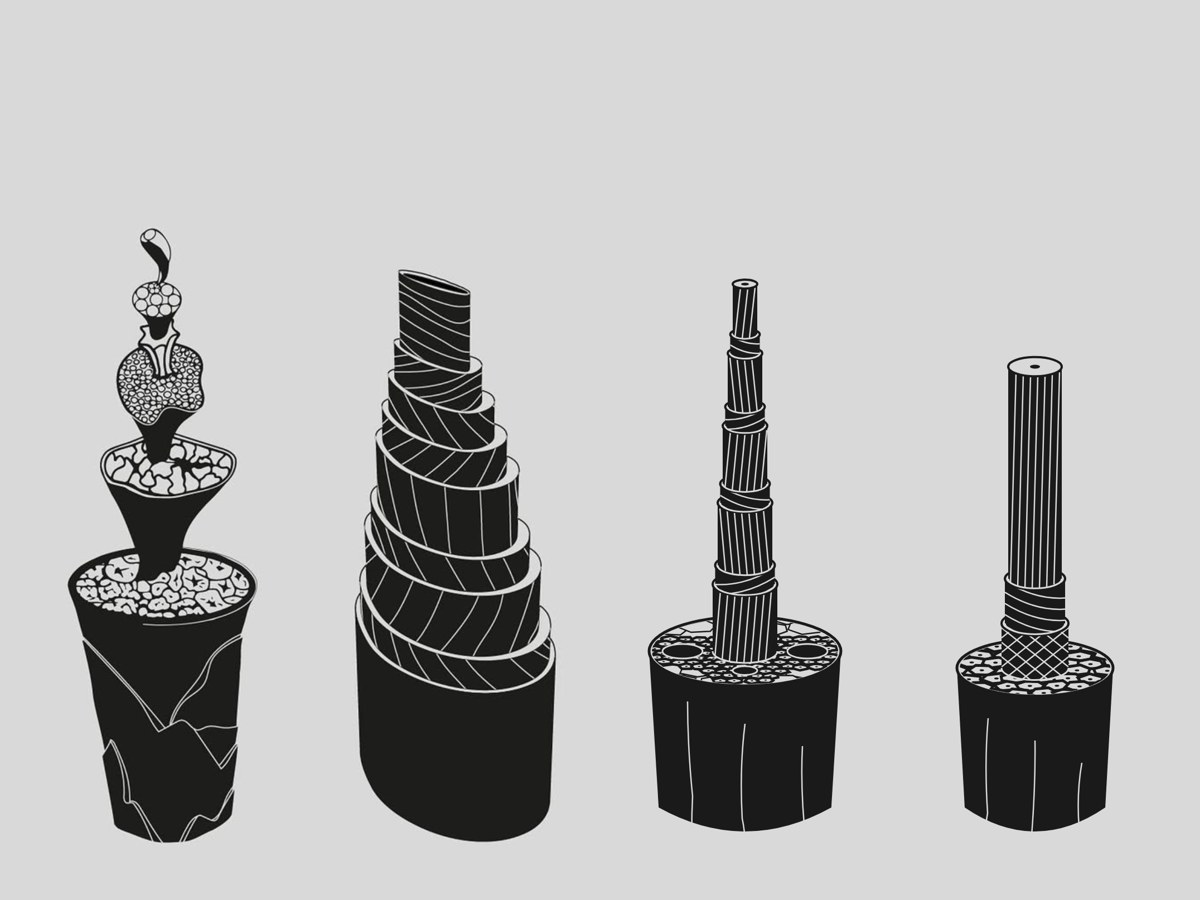
Four fibres compared
Each drawing is a single fibre cut open to show how it is built. Choose one to read more.
Three of the four are plant fibres, made mostly of cellulose. In flax and bamboo the cellulose runs close to the length of the fibre, which makes them strong and stiff enough to reinforce a composite. In cotton it winds around a hollow centre, which makes the fibre softer, weaker and very absorbent.
Wool is the odd one out. It is a protein, keratin, built as a bundle of fine spirals inside a coat of overlapping scales. It is the weakest and least stiff of the four by a long way, and that is the point: it stretches, bends and springs back.
Carbon to produce
Tensile strength
Stiffness
The figures behind it
Per kilo of fibre, from the Spot Material database. Each name opens the fibre in the checker.
| Fibre | Carbon, kg CO2e per kg | Strength, MPa | Stiffness, GPa | Cost, USD per kg |
|---|---|---|---|---|
| Sheep woolKeratin, a protein | 25 to 40 | 120 to 180 | 2.3 to 3.4 | 8 to 25 |
| CottonCellulose | 1.45 to 3.5 | 300 to 600 | 6 to 8 | 1.2 to 2.2 |
| BambooCellulose and lignin | 0.2 to 0.8 | 550 to 1690 | 32 to 55 | 2 to 8 |
| Flax (linen)Cellulose | 0.4 to 1 | 500 to 1350 | 27 to 103 | 4 to 8 |
Sheep wool
The highest footprint of the four, and a long list of things no other fibre does as well.
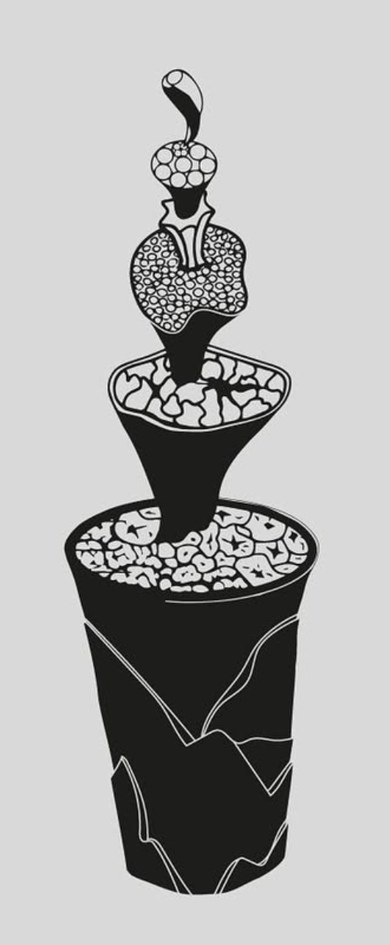
Start with the problem. Wool takes 25 to 40 kg CO2e per kilo to produce, many times more than any of the plant fibres here. Most of that is the sheep: its feed, and the methane it gives off, which warms far more than the same weight of CO2. Scouring the fleece takes energy and water, and only about half of a fleece ends up as usable fibre.
Then look at what you get. Wool is made of layers of spiralling fibrils. They straighten when the fibre is stretched and pull back when it is let go, so wool resists creasing and can be bent thousands of times before it breaks, far more than cotton or man-made fibres.
What wool does well
It can take up around a third of its own weight in water before it feels wet, and it keeps insulating while damp.
It resists fire and puts itself out when the flame is taken away.
Its elastic recovery keeps cloth from creasing and carpets from flattening.
As a slab it matches other fibre insulation at about 0.039 W/mK, and it takes up and gives back moisture, which helps even out indoor humidity.
Felts and nonwovens absorb sound, which is why wool turns up in speaker covers, panels and aircraft interiors.
It sheds no microplastics, and untreated wool is biodegradable and compostable.
Wet wool fibres lock together into a dense, tough fabric with no binder at all.
It is renewable, sheared each spring, and comes in its own range of natural colours.
Making the carbon count. A material this costly to produce earns its place where those properties are used and where it will last: a coat, a carpet, upholstery, insulation. Its footprint is spread over every year it stays in use, so the worst wool product is a short-lived one.
The best wool is wool that already exists. Recycled wool comes in at 0.1 to 0.9 kg CO2e per kilo in the database, against 25 to 40 for new. The fibres are shorter and weaker after recycling, so it suits felts, padding, insulation and blended yarns better than fine cloth.
Carbon to produce, kg CO2e per kg
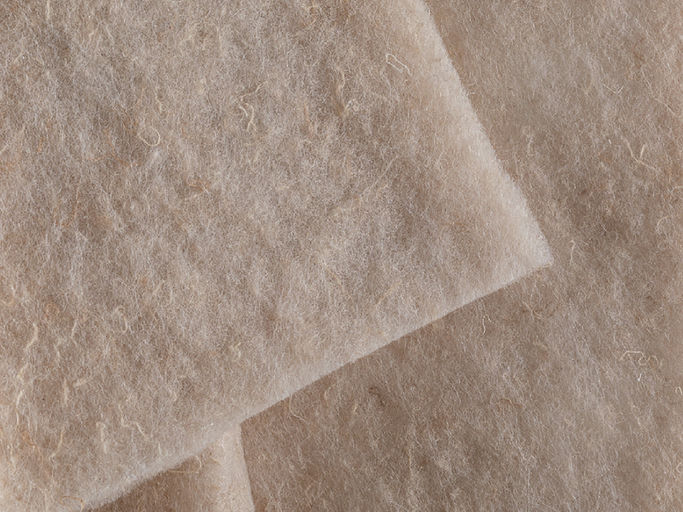
Recycled wool insulation and padding
Imbotex Lab, in Italy, mechanically recycles scraps of wool and cashmere, from before and after use, into nonwoven insulation and padding for clothing and bedding. The products carry the Global Recycled Standard.
Image: Imbotex Lab
See the innovation →Labels to look for, and rules to check:
- Responsible Wool Standard
- GOTS
- OEKO-TEX
- Global Recycled Standard
- EU azo dye limits
- Textile producer responsibility
Check sheep wool · Check recycled wool
Cotton
Soft, breathable, absorbent and cheap. The trouble is in how it is grown and finished.
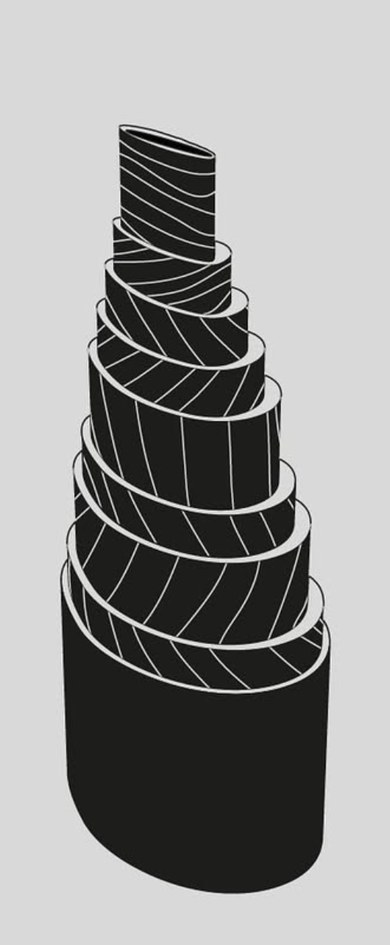
Cotton grows as a hollow fibre around the seed of the cotton plant. It plays no structural part in the plant, so it is light, supple and almost pure cellulose. It can swell to hold many times its own weight in water, and it takes dye very well.
It makes up about 80% of all natural fibre sold. That scale is the problem: cotton accounts for around 5% of all pesticide sales and 10% of insecticide sales, and once picked it is scoured, bleached, mercerised and dyed.
Organic cotton comes in at 0.95 to 1.8 kg CO2e per kilo and recycled cotton at 0.3 to 1, against 1.45 to 3.5 for conventional fibre.
Water to dye a kilo of cotton fabric, litres
Dyeing figure from published dyehouse studies, not the database: about 120 litres per kilo for conventional reactive dyeing (BUFT) and an average of 136 across surveyed mills in Bangladesh (KTU). Mills vary widely.
Cotton grown in colour
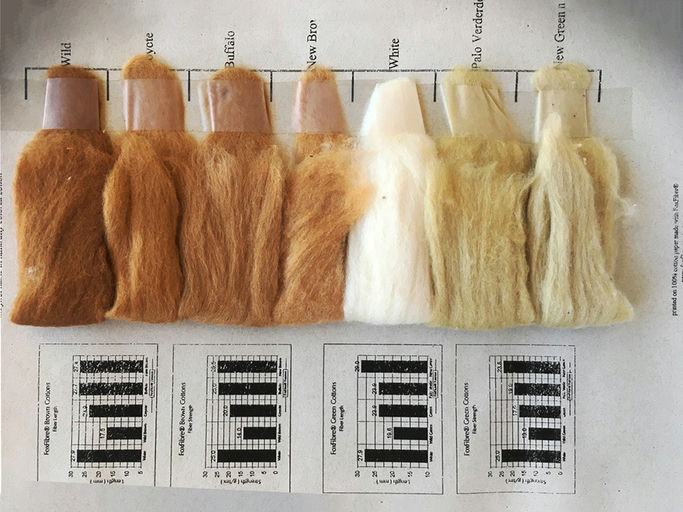
Cotton is naturally off-white, or a muted red, green or brown. Foxfibre, bred by Sally Fox in the US, was the first naturally coloured cotton with fibres long enough to spin by machine. It is grown organically, and skips bleaching and dyeing altogether.
Image: Sally Fox
See the innovation →Labels to look for, and rules to check:
Check cotton · Check organic cotton · Check recycled cotton
Bamboo
A grass that grows as a tube, with the strongest fibres of the four.
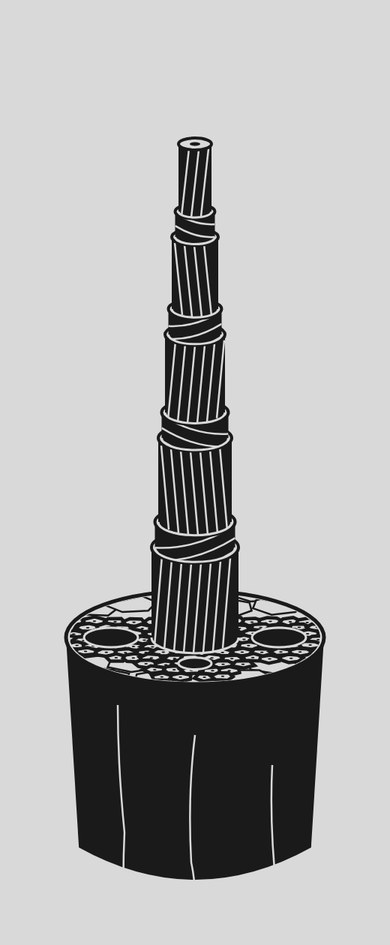
A bamboo stem is a hollow tube of soft tissue with bundles of long, tough fibres running through it, densest towards the outside where the stem takes most load. Split the stem and those bundles become strips: strong, flexible and ready to weave.
The fibre reaches 550 to 1690 MPa in tension at a density of about 800 kg/m³, and takes 0.2 to 0.8 kg CO2e per kilo to produce, the lowest here.
A word on bamboo fabric. The split fibre is too coarse for soft cloth. Most textile sold as bamboo is the stem ground up, dissolved and spun again as viscose or lyocell: a regenerated cellulose fibre, with the chemistry and footprint that go with it.
Woven as it grows
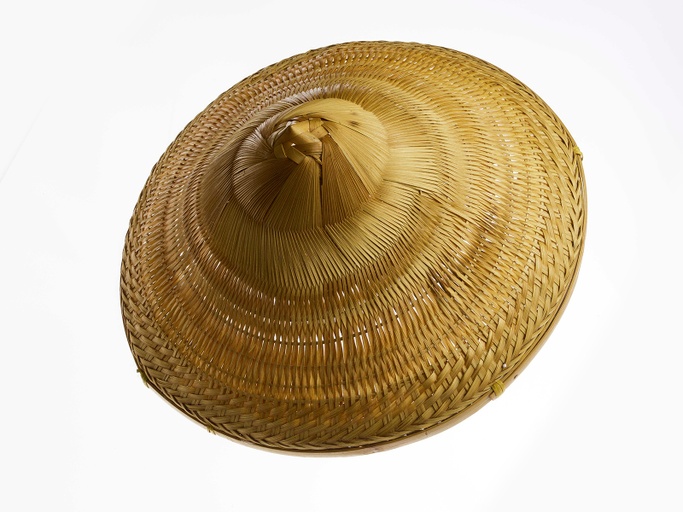
An East Asian conical sun hat, woven from split bamboo strands. The material is the stem cut into strips.
Carbon to produce, kg CO2e per kg
Per kilo of material, not per hat. A plastic rain or sun hat is usually one of these two.
Labels to look for, and rules to check:
Flax (linen)
The stiffest of the four, and the one that can stand in for glass and carbon fibre.
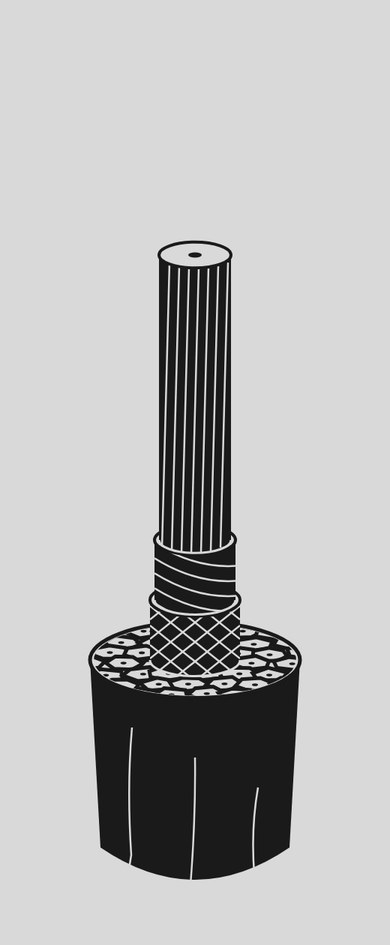
Flax fibre comes from the stem of the flax plant, where it grows in bundles of long cells with thick cellulose walls. Spun and woven it is linen: strong, soft and absorbent.
Its stiffness is 27 to 103 GPa and its strength 500 to 1350 MPa, for 0.4 to 1 kg CO2e per kilo. That combination is why flax is woven into reinforcement for composite panels, made with the same processes as glass or carbon fibre.
A flax composite does not match a carbon fibre one. It has about a quarter of the stiffness, for about a fifth of the carbon.
Carbon to produce, kg CO2e per kg
Stiffness, GPa
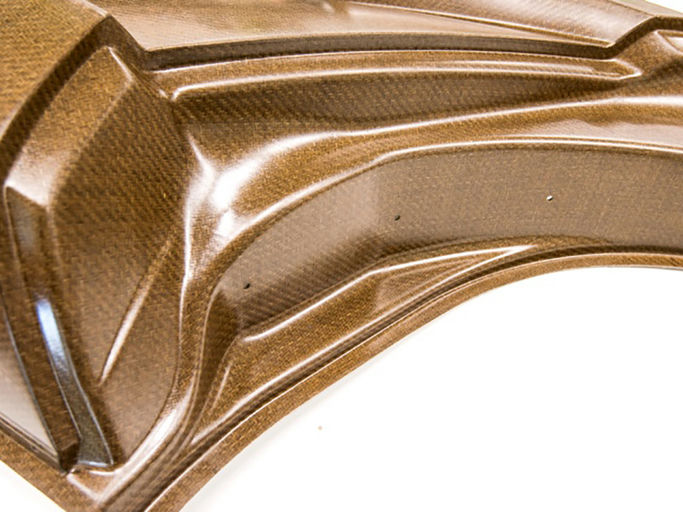
Flax composite reinforcement
Bcomp weaves flax into reinforcement for composite panels, made with the same processes as glass or carbon fibre.
Image: Bcomp
See the innovation →Labels to look for:
Check flax fibre · Check flax composite · For the wider picture, see Textiles and fibres and Composites.
How it was worked out
- Figures are the ranges in the Spot Material database on 25 November 2026, per kilo of fibre, for sheep wool, cotton fibre, bamboo bast fibre and flax fibre. Bars are drawn at the middle of each range.
- Carbon covers producing the fibre. It does not include spinning, weaving, dyeing or finishing, or how long the product lasts.
- Strength and stiffness are for the single fibre. A yarn, a cloth or a composite made from it will be lower.
- Composites: the flax composite is epoxy with 50% continuous flax; the carbon fibre composite is epoxy with 60% continuous carbon fibre, both measured along the fibre.
- Dye water is the one figure that does not come from the database; its sources are linked beside the chart.
- The drawings are simplified cutaways by Rob Thompson, made to show how each fibre is built, not to scale.
Have a material in mind?
The checker shows its carbon, its concerns and what you could use instead, for more than 800 materials or every part of a product at once.