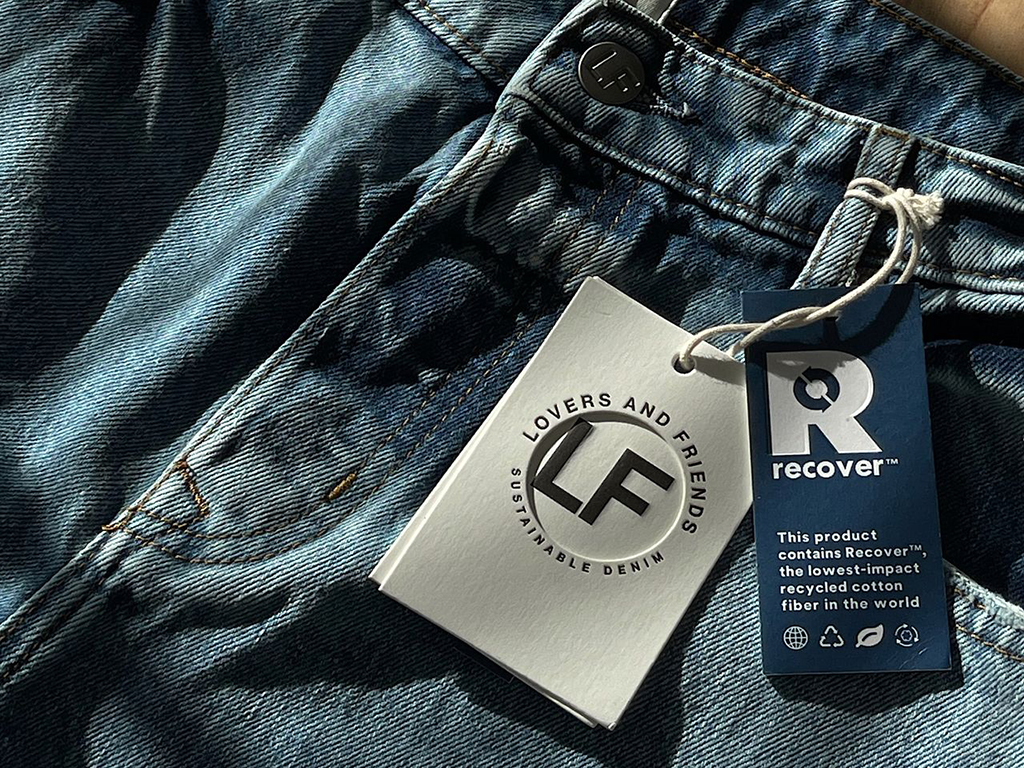
Photo: Recycled cotton fibre made from textile waste by Recover. Image: Recover.
01Why fibres
Which fibre is best?
There is no best fibre, only a best fibre for a job. The world made about 132 million tonnes of fibre in 2024. Polyester alone was 59% of it and cotton 19%; everything else, from wool to lyocell, shares the rest.
Recycling barely registers. Recycled polyester is about 12% of all polyester, and 98% of that comes from plastic bottles, not old clothes. Less than 1% of the world's fibre is made from recycled textiles.
The database holds 49 fibre and textile grades in 15 families. Four questions sort them:
- What does a kilo cost in carbon, and how long will the product last?
- Does it shed plastic microfibres?
- Where did the raw material come from: a field, a forest, an animal or an oil well?
- Can it be recycled as a textile, or only burned?
Sources: Just Style, on Textile Exchange's Materials Market Report 2025 · EU Textiles Ecosystem Platform, Materials market report 2025
A kilo of fibre, compared
Per kilo of fibre, the plant stems come lowest: hemp is 0.63 kg CO₂e/kg, flax 0.7 kg CO₂e/kg and jute 0.95 kg CO₂e/kg. Cotton is 2.48 kg CO₂e/kg. The synthetics sit in the middle, with polyester at 4.45 kg CO₂e/kg and nylon at 8.25 kg CO₂e/kg. Sheep wool is far higher at 32.5 kg CO₂e/kg, because sheep give off methane.
Two cautions. These figures are for fibre, before spinning, weaving, dyeing and finishing, which can add as much again and depend heavily on the energy used in the mill. And a kilo is not a garment: a wool coat worn for twenty years and a polyester top worn for one season are not the same purchase.
Carbon footprint of fibre, cradle to gate (kg CO2e per kg)
Plant, animal, wood-based and synthetic
Fibres come from four places:
- Plants: seed hairs (cotton, kapok), stems (flax, hemp, jute, ramie) and leaves or husks (sisal, coir).
- Animals: wool and hair from sheep, goats and alpacas, and silk from silkworms.
- Wood, dissolved and re-spun: viscose, modal and lyocell. They are made from plants but in a chemical plant.
- Oil: polyester, nylon, acrylic and elastane.
The first two groups biodegrade. The third does too, if nothing synthetic is added. The fourth does not.
Typical carbon by family (kg CO₂e/kg; number of grades in brackets)
Each family opens in the material checker.
02Natural fibres
Cotton and the stem fibres
Cotton is soft, strong when wet and familiar to every mill. Its problems are in the field: irrigation in dry regions, pesticides, and fertiliser, which is where most of its carbon comes from. Organic cotton at 1.38 kg CO₂e/kg avoids synthetic fertiliser and pesticides, against 2.48 kg CO₂e/kg for conventional cotton; yields are lower, so it needs more land.
Flax, hemp and jute grow with little or no irrigation and few chemicals, and the whole stem is used. European flax is rain-fed. The fibres are stiffer and coarser than cotton, which suits linen, canvas, rope, sacking and composites better than T-shirts. Spinning adds to the figure: linen yarn is 1.65 kg CO₂e/kg against 0.7 kg CO₂e/kg for the fibre.
Plant fibres compared (kg CO2e per kg)
Wool, cashmere and silk
Animal fibres are the high-carbon end of textiles. Sheep wool is 32.5 kg CO₂e/kg per kilo of clean fibre, silk 82.5 kg CO₂e/kg and cashmere 170 kg CO₂e/kg, many times polyester at 4.45 kg CO₂e/kg. The cause is the animal: methane from digestion, and many animals for little fibre in the case of cashmere goats, whose grazing has also degraded grasslands.
What wool gives back is performance and life. It resists dirt, smell and flame, needs less washing, lasts for decades and biodegrades.
It is also the one fibre with a long-established recycling industry. Recycled wool, pulled apart mechanically and re-spun, is 0.5 kg CO₂e/kg, and makes up about 7% of the wool market. If you want wool with a low footprint, recycled is the answer.
Animal fibres, new and recycled (kg CO2e per kg)
03Made fibres
Polyester, nylon and the synthetics
Synthetics won the market on price, strength and easy care. Polyester is 4.45 kg CO₂e/kg, nylon 8.25 kg CO₂e/kg and acrylic 6.5 kg CO₂e/kg. All are made from oil or gas, none biodegrades, and all shed microfibres.
Recycling lowers the carbon: recycled polyester is 2 kg CO₂e/kg, and recycled nylon made by breaking old nets and carpets back down to their building block is 1.6 kg CO₂e/kg.
The catch with recycled polyester. Almost all of it is made from clear drinks bottles. A bottle can be recycled into a bottle again and again; once it becomes a fleece it has nowhere further to go. Textile-to-textile polyester recycling is only now reaching industrial scale. And recycled or not, it still sheds.
Elastane deserves a mention: a few per cent gives stretch, and makes the whole fabric much harder to recycle.
Synthetic fibres, new and recycled (kg CO2e per kg)
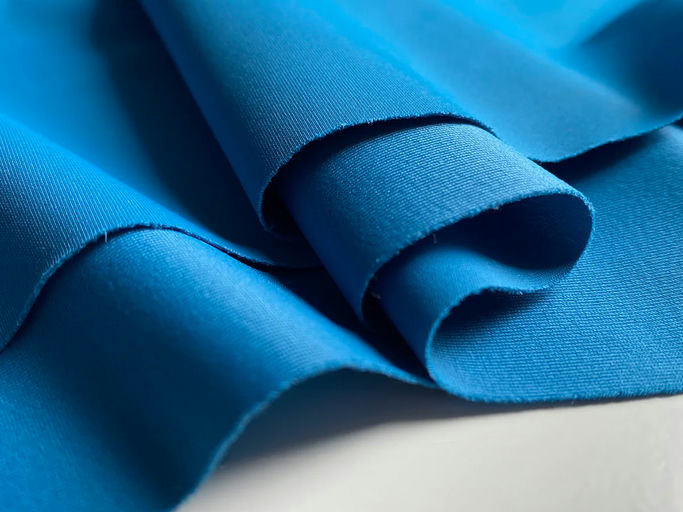 Econyl recycled polyamide (PA), nylonAquafilEconyl by Aquafil is a regenerated polyamide 6 (PA6), nylon, made entirely from waste such as fishing nets, carpets and fabric scraps.Image: Aquafil
 Cycora chemically recycled polyesterAmbercycleAmbercycle have developed a chemical recycling process that converts waste polyethylene terephthalate (PET), polyester, fibre and textiles into raw materials without any loss of quality.Image: Ambercycle
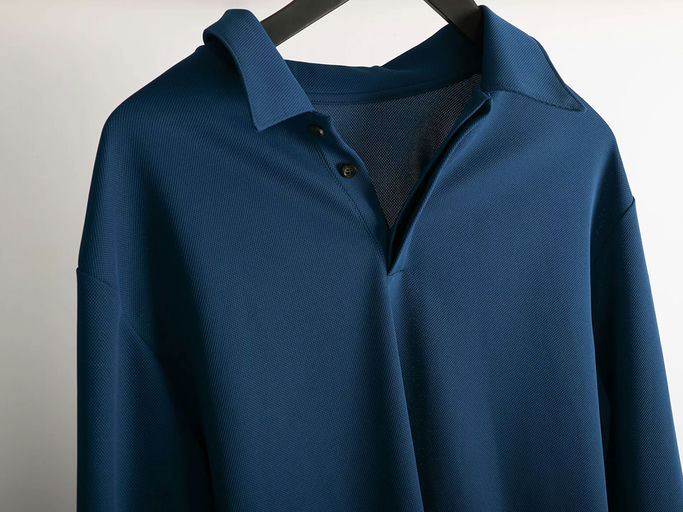 Syre chemically recycled polyesterSyre · In developmentBacked by H&M Group, Syre have developed a chemical recycling process to convert waste polyester (PET) textiles into new fibres. The polyester, derived from post-consumer waste and direct industry waste from factories, is depolymerised to make BHET, which forms the building block for new polyester fibre.Image: Syre
Fibres from wood: viscose, modal, lyocell
Dissolve wood pulp and squirt it through fine holes and you get a fibre that feels like silk or cotton and biodegrades like paper. The three main types differ in how the pulp is dissolved.
- Viscose (3.5 kg CO₂e/kg) uses carbon disulphide, a toxic solvent. The wide range reflects the gap between the best mills, which capture and reuse it, and the worst.
- Modal (4.25 kg CO₂e/kg) is a stronger variant of the same process.
- Lyocell (3.75 kg CO₂e/kg) uses a non-toxic solvent in a closed loop that recovers almost all of it.
The second question is the forest. Pulp from ancient or endangered forests is the main risk; FSC or PEFC certified pulp is the minimum to ask for.
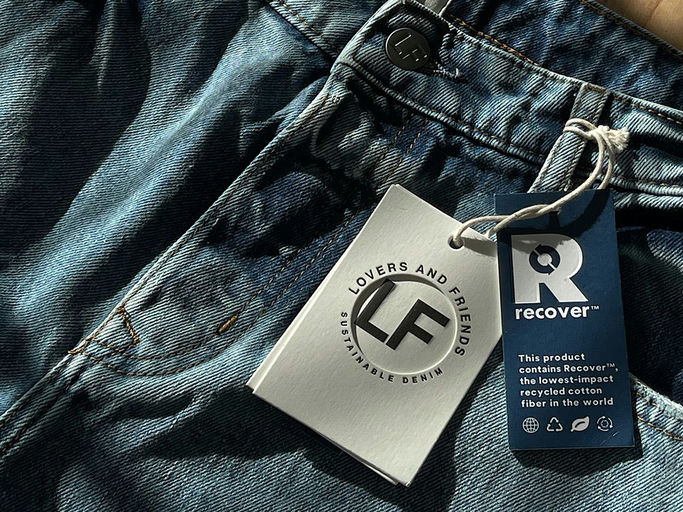
The newest step swaps wood for waste: fibres made from worn-out cotton textiles are now produced commercially in small volumes.
Wood-based fibres beside cotton and polyester (kg CO2e per kg)
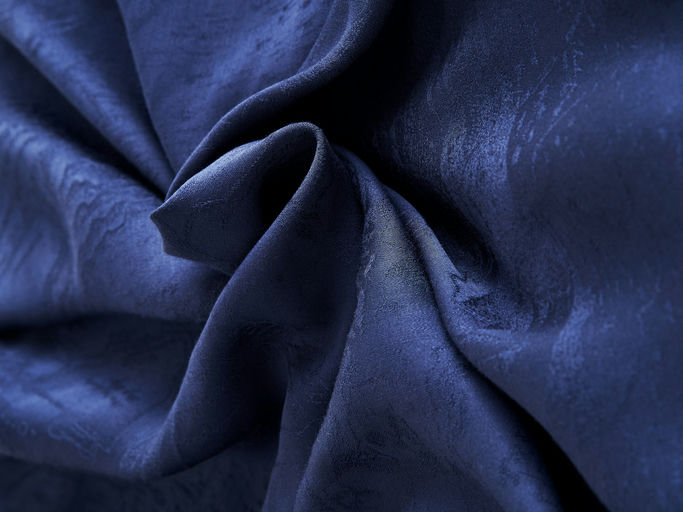 Circulose dissolving pulp from textile wasteCirculose (formerly Renewcell)Circulose by Renewcell are regenerated cellulose textiles produced from old cotton garments. The waste material is shredded, de-buttoned, de-zipped, de-coloured and turned into a slurry. Contaminants and other non-cellulosic content are separated and removed.Image: Circulose (formerly Renewcell)
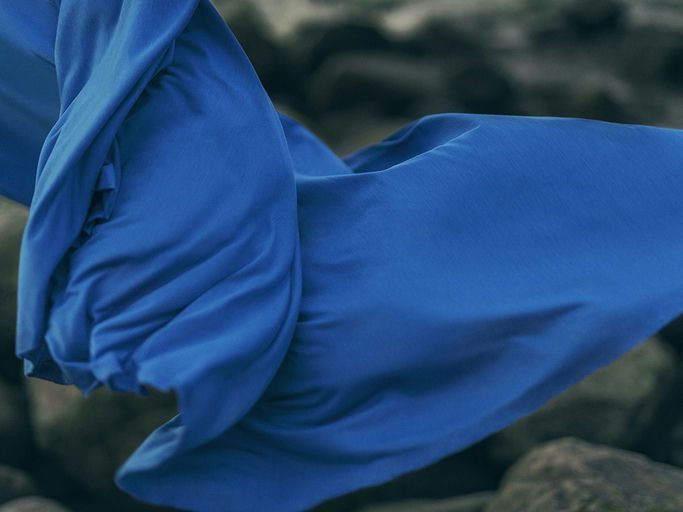 Infinna regenerated cellulose fibreInfinited Fiber · In developmentInfinna (Infinited Fiber) take mixed textile waste with high cotton (or cellulose) content and chemically recycle it with urea to produce new regenerated cellulose carbamate fibre. A range of fabrics are possible, from 50-100% Infinna, including denim, jersey, terry and woven fabric. Image Infinna.Image: Infinited Fiber
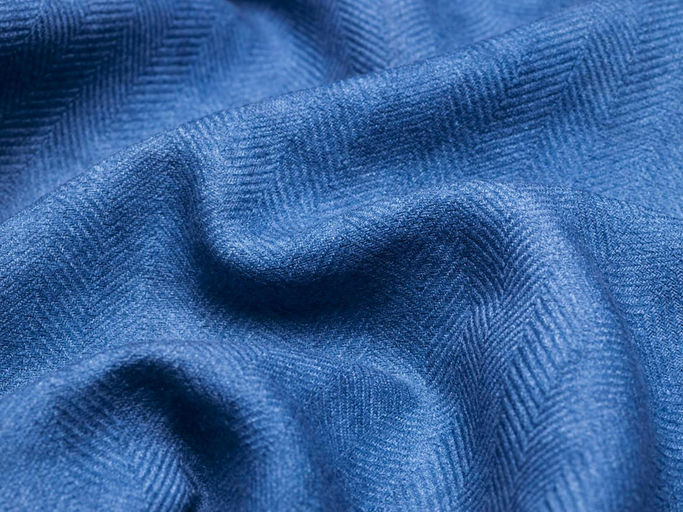
 Tencel RefibraLenzingTencel Refibra regenerated cellulose textile combines recycled cotton waste from garment production (up to one third) and wood pulp sourced from sustainably managed forests to make new Tencel Lyocell fibre.Image: Lenzing
 Spinnova fibreSpinnovaSpinnova is a textile fibre produced from micro fibrillated cellulose (MFC), made from FSC-certified wood pulp or from waste streams such as leather, textile and crop residues, without harmful dissolving chemicals. It is white, fluffy and firm, with a warmth comparable to lambswool.Image: Spinnova
04Watch-outs
The warnings
Microfibres are the concern that separates synthetic from natural. Every wash and every wear rubs tiny fibres loose; from polyester, nylon and acrylic they are plastic and do not break down. The European Environment Agency puts synthetic textiles at about 8% of the microplastics Europe releases to the oceans, and global estimates run from 16% to 35%. Most is released in the first few washes.
The EU's 2023 microplastics restriction covers particles added on purpose, such as glitter. Fibres shed by clothing are not covered by it.
For natural fibres the concerns move upstream: water and pesticides for cotton, land and methane for wool, forests for viscose.
Concerns tagged on fibre grades (number of grades)
Out of 49 grades.
Sources: FashionUnited, What the fashion industry has to do with microplastics pollution · Garrigues, The European Union bans the use of microplastics
Blends, dyes and finishes
The fibre is only the start of a textile.
- Blends. Polycotton, wool with nylon, anything with elastane: blends improve wear and cut cost, and they are the main reason old textiles cannot be recycled into new ones. A blend also sheds plastic even when the label leads with the natural fibre.
- Dyeing and finishing. Wet processing uses large amounts of water, heat and chemicals, and is often the most polluting step. Dope-dyed synthetics, coloured in the melt, and waterless dyeing avoid much of it.
- Finishes. Water- and stain-repellent finishes have long relied on PFAS. Easy-care and crease-resistant finishes can release formaldehyde. Both are now restricted or being restricted in the EU.
- Backings and coatings. A natural face on a polyurethane or latex backing is a composite, and should be judged as one.
A mono-material fabric with a known dye and no finish is the easiest to recycle and the safest to live with.
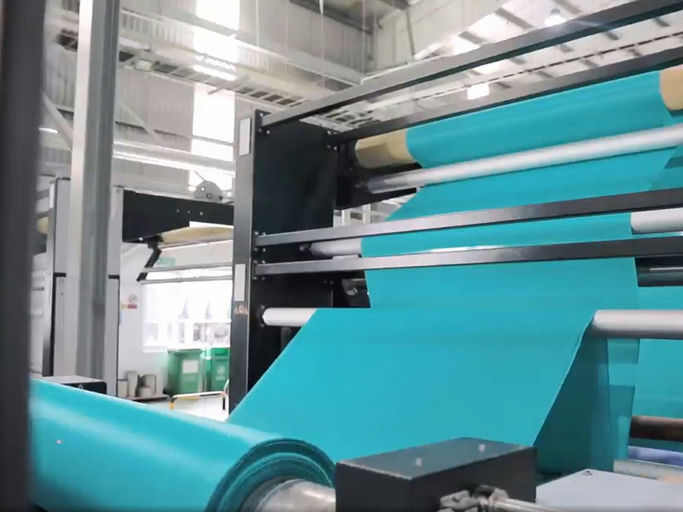 Dyecoo waterless textile dyeingDyeCooDyecoo developed a process for dyeing textiles using recycled CO2, reclaimed from existing industrial processes. The gas is heated and pressurised to make it supercritical, at which point it has similar density to liquid. A specially developed disperse dye is dissolved into it and applied to fabric.Image: DyeCoo
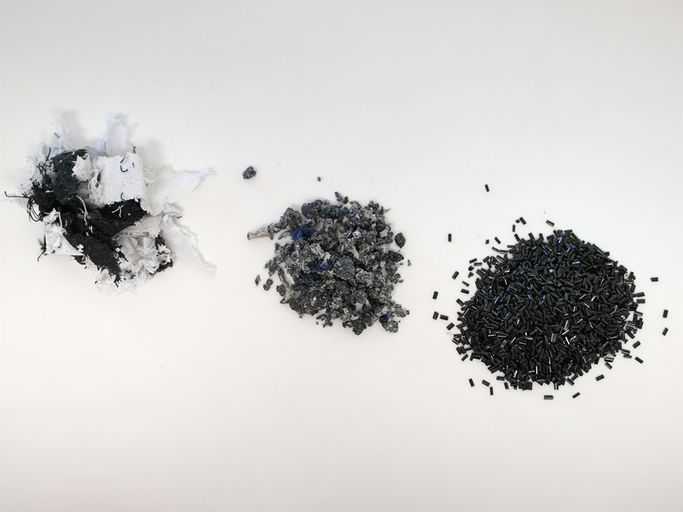 Blocktexx textile recycling technologyBlockTexx · In developmentBlocktexx have developed a chemical recycling technology capable of handling difficult to recycle fabrics made up of cotton and polyester, such as the popular polycotton.Image: BlockTexx
After use
The EU generates about 12.6 million tonnes of textile waste a year, and less than 1% of textiles worldwide are recycled into new textiles. Most collected clothing is resold, downcycled into wipes and insulation, or exported.
Longer use is the biggest lever a designer has: durable construction, repairable details and colours that last. After that, single-fibre fabrics, removable trims and clear labelling give recyclers something to work with.
Grades tagged with each end-of-life route, out of 49.
Rules and labels
Textile waste is now the producer's problem in the EU. Member states have had to collect textiles separately since 1 January 2025. A 2025 change to the waste directive goes further: every member state must set up an extended producer responsibility scheme by 17 April 2028, under which brands pay for the collection, sorting and recycling of what they sell. Fees can be set higher for less sustainable products, which will reward durable, recyclable, single-fibre designs.
Labels to know: GOTS for organic fibres through the whole chain, the Global Recycled Standard for recycled content, the Responsible Wool Standard for animal welfare and land, and OEKO-TEX for harmful substances in the finished textile.
- 1 Jan 2025Separate collection of textiles required across the EU
- 16 Oct 2025Revised waste directive in force
- 17 Jun 2027Deadline for national laws
- 17 Apr 2028Producer responsibility schemes for textiles and footwear in every member state
- Extended producer responsibility for textiles (Directive (EU) 2025/1892)
- Ecodesign for Sustainable Products Regulation (EU) 2024/1781
- REACH: hazardous substances in clothing, textiles and footwear (Annex XVII entry 72)
- REACH: azo dyes that release carcinogenic aromatic amines (Annex XVII entry 43)
- Global Organic Textile Standard (GOTS)
- OEKO-TEX STANDARD 100 / LEATHER STANDARD
- Global Recycled Standard (GRS)
- Responsible Wool Standard (RWS)
- BCI Cotton (Better Cotton Initiative)
- Masters of FLAX FIBRE (formerly European Flax)
- EU Ecolabel
Sources: Debevoise, The EU's revised directive on waste (Oct 2025) · DSS, EPR in textiles 2026
05Specifying
More from Spotlight
Recycled and next-generation fibres from Spotlight, the Spot Material innovation library.
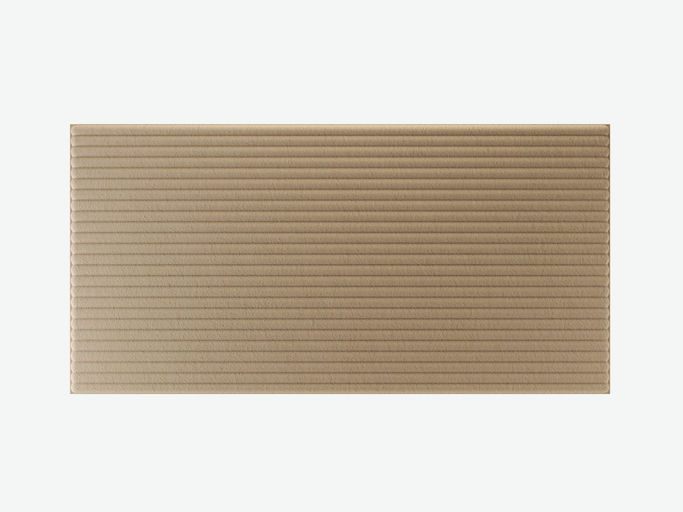 Archisonic Cotton acoustic wall tiles by Impact AcousticImpact AcousticArchisonic Cotton is a range of sound-absorbing wall tiles by Impact Acoustic, made of 74% cotton linters (the short fibres left on cotton seeds after ginning, a by-product of cotton production).Image: Impact Acoustic
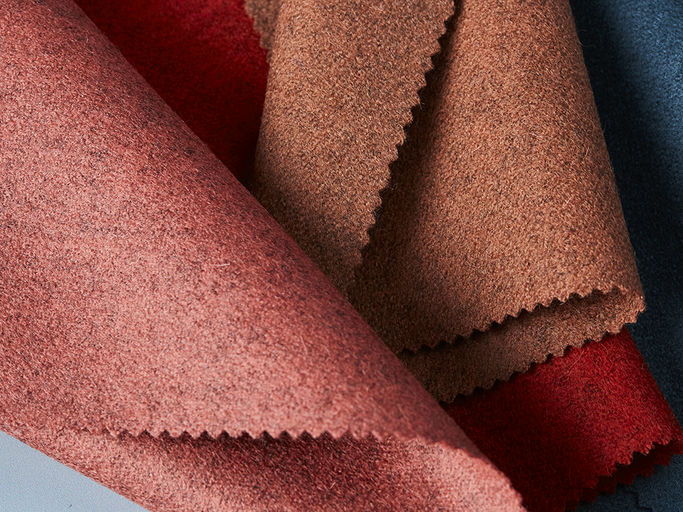 Blazer Lite lambswool upholstery fabric by CamiraCamira FabricsBlazer Lite is a 100% virgin wool upholstery cloth made from New Zealand lambswool, spun, woven, milled and piece-dyed at Camira's mills in West Yorkshire, UK. It is a lighter version (about 355 g/m2) of Camira's long-running Blazer felted wool, made for contract seating, panels and screens.Image: Camira Fabrics
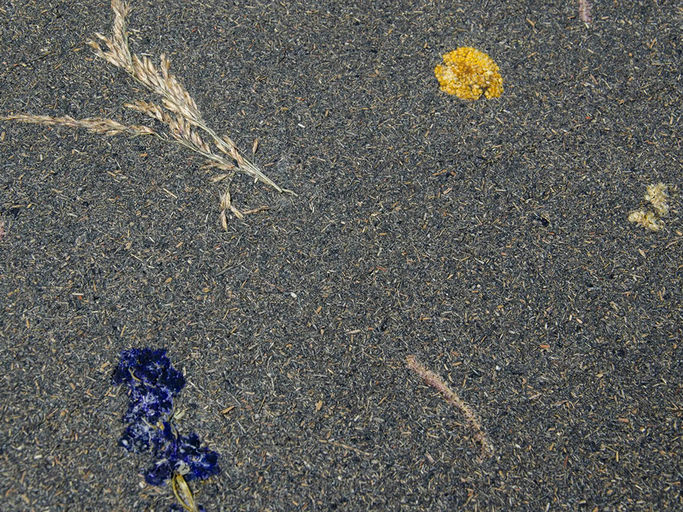 Compostboard plant-fibre sheet by RikMakesPartikal (RikMakes)Compostboard is a sheet material developed by the Eindhoven designer Rik Maarsen (Partikal) from plant fibres taken from local organic waste streams, such as hemp chips, straw dust, flax and withered flowers, bound with a starch- or sugar-based adhesive.Image: Partikal (RikMakes)
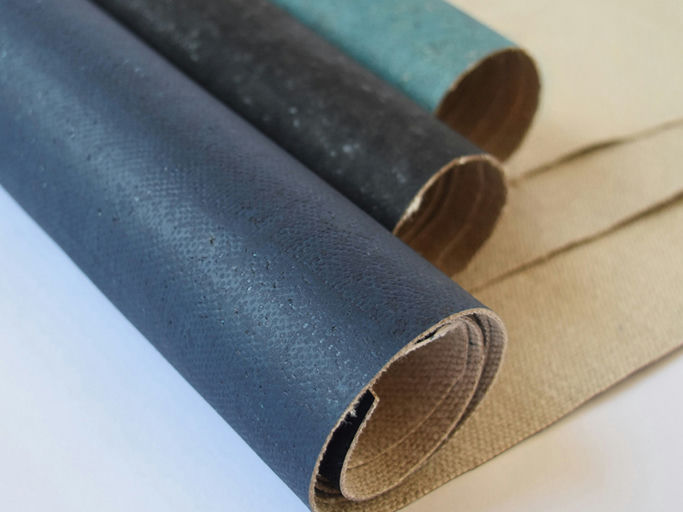 CORKonLINEN compostable cork and linen material by RTFACT BrandsRTFACT BrandsCORKonLINEN is a leather alternative from RTFACT Brands of Brest, France, made from just three ingredients: thin Portuguese cork, linen woven from flax grown in northern France, and a water-based glue. It was developed over about 18 months of research and is aimed at bags, small leather goods and shoes.Image: RTFACT Brands
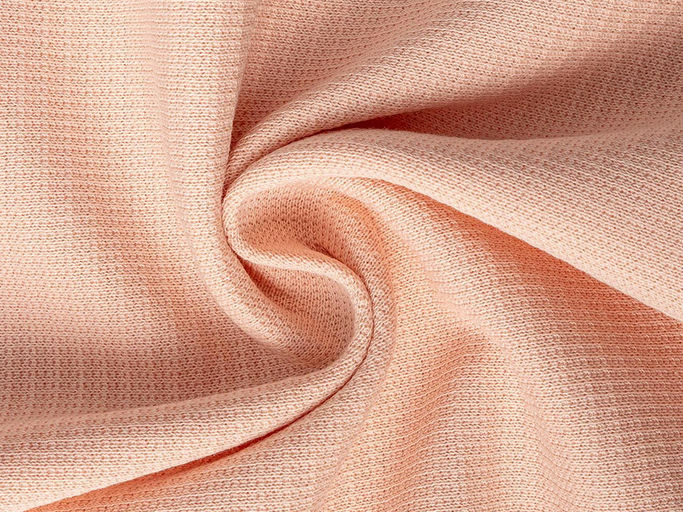 Agraloop Biofiber natural fibre by Circular SystemsCircular SystemsAgraloop Biofibre is a textile fibre produced from agricultural products and leftovers, such as hemp, flax, banana and pineapple.Image: Circular Systems
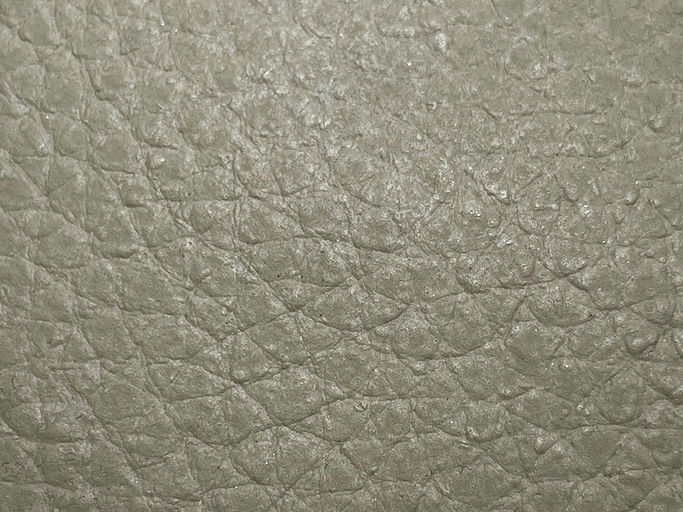 Bacterial cellulose textiles by Modern SynthesisModern Synthesis · In developmentModern Synthesis are developing a new class of materials using nanocellulose derived from bacterial fermentation. They produce a film of nanocellulose, which they combine with a natural textile to create a versatile range of non-woven materials.Image: Modern Synthesis
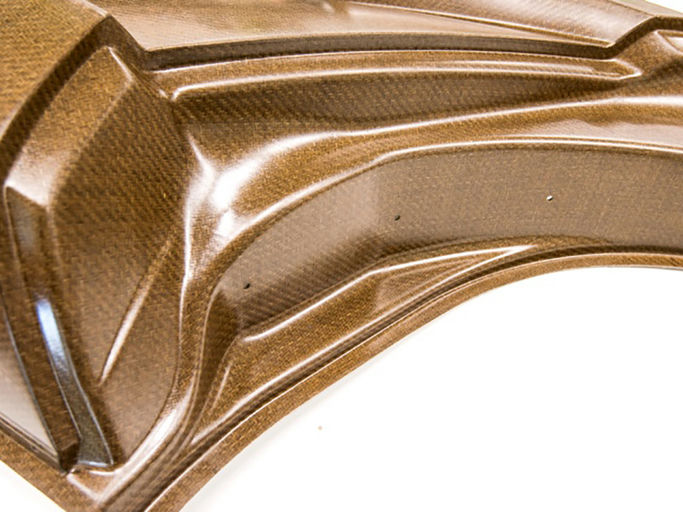 Bcomp flax fibre composite reinforcementBcompBcomp have developed flax fibre reinforcement solutions, including powerRibs and ampliTex, suitable for processing via standard composite manufacturing techniques such as wet lay-up, compression moulding, infusion and resin transfer moulding (RTM).Image: Bcomp
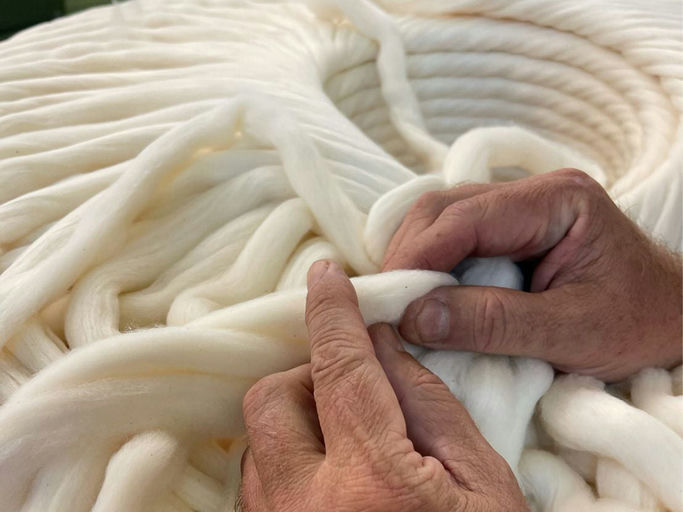 Bear Fiber hemp textileBear FiberBear Fiber, a US company, produce cottonised hemp fibre and hemp cotton blends for weaving and knitting. How a finished textile can be disposed of will also depend on any blend fibres, dyes and finishes. Image Bear Fiber.Image: Bear Fiber
Choosing a fibre
A short checklist:
- Decide what matters most for this product: carbon, no microplastics, long life or recyclability. You will rarely get all four.
- For low carbon and no plastic: hemp, flax, jute, organic cotton, lyocell.
- For wool's performance at a fraction of the carbon: recycled wool.
- If it must be synthetic: recycled, ideally from textile waste and not bottles, and built to last.
- Avoid blends where you can, and elastane unless stretch is essential.
- Ask where the pulp for viscose came from and how the mill handles its solvent.
- Ask about dyes and finishes, and avoid PFAS repellents.
- Design for long use and repair first.
Then test a fabric in the Material checker and compare the routes.