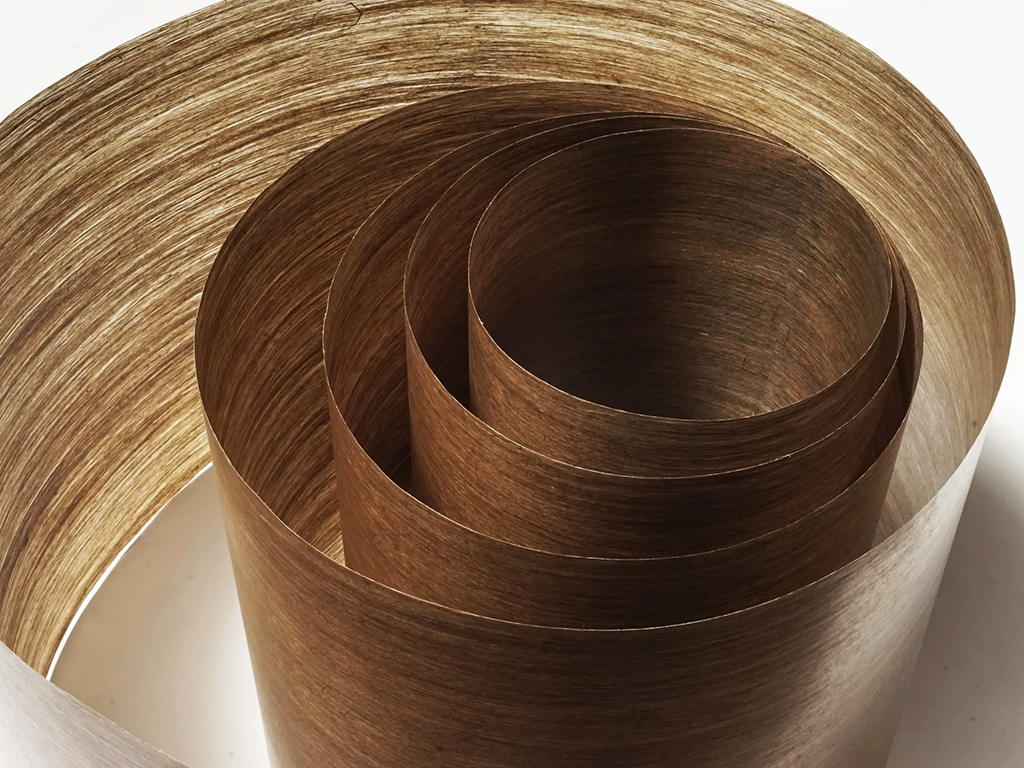
Photo: Ekoa, a composite of flax fibre and plant-based resin. Image: Ekoa.
01Why composites
Two materials acting as one
A composite puts strong, stiff fibres where the loads are and holds them in place with a resin. The result can be stronger than steel at a fraction of the weight, in almost any shape, and it does not rust. Wind turbine blades, aircraft, boats, bicycles and bathtubs all depend on it.
The same bond is the problem. Fibre and resin are different materials joined for good, so a composite cannot simply be melted and made again. The database holds 60 fibre, resin and composite grades in 8 families.
Three choices decide a composite's footprint:
- The fibre: carbon, glass, basalt, aramid or a plant fibre.
- The resin: one that sets for good (thermoset) or one that can be re-melted (thermoplastic).
- How much fibre, and how long: continuous fibres carry far more load than chopped ones.
The carbon range is very wide
Per kilo, composites span a factor of more than ten. A flax and polypropylene composite is 1.35 kg CO₂e/kg, below mild steel at 2.1 kg CO₂e/kg. A glass fibre and epoxy laminate is 3.45 kg CO₂e/kg. A carbon fibre composite is 18 kg CO₂e/kg, above primary aluminium.
Per kilo is not the fair test, though. A composite part usually weighs much less than the metal part it replaces, and in something that moves, that weight saving pays back over the product's life. The lightweighting briefing in this library works through an example.
Carbon footprint, raw material to factory gate (kg CO2e per kg)
Fibres and resins
The families on this page are the ingredients: the reinforcing fibres (carbon, glass, basalt and aramid) and the thermoset resins that bind them (epoxy, polyester and vinyl ester). Composites built on plant fibres or on thermoplastics such as polypropylene and nylon sit with their own families in the database; they are compared by name in the sections below.
Typical carbon by family (kg CO₂e/kg; number of grades in brackets)
Each family opens in the material checker.
02Ingredients
The fibres
Carbon fibre (25.8 kg CO₂e/kg) is the stiffest and lightest, and by far the most carbon-intensive. It is made by slowly baking an acrylic fibre at up to 1,500°C or more, and roughly half the starting material is lost on the way. Published figures put the energy to make it at 183 to 594 MJ per kilo.
Glass fibre (1.75 kg CO₂e/kg) is the workhorse: melted sand and minerals drawn into filaments. It is heavier and less stiff than carbon and a tenth of the footprint or less. Most composites in the world are glass.
Basalt fibre (0.4 kg CO₂e/kg) is melted volcanic rock with nothing added, with properties a little above glass.
Aramid (10.8 kg CO₂e/kg) is the tough one, used where impact and cut resistance matter.
Flax (0.7 kg CO₂e/kg) and other plant fibres are light and damp vibration well. They are less strong, vary from harvest to harvest and take up moisture.
Reinforcing fibres, before any resin (kg CO2e per kg)
Sources: Alsubaie and Yang, Recycled carbon fibre in circular economy applications (2026)
The resins
The resin is often a third to a half of the part by weight, and it can carry as much of the footprint as the fibre.
Thermosets cure by a chemical reaction that cannot be reversed. Epoxy (6.45 kg CO₂e/kg) gives the best performance; polyester resin (4.25 kg CO₂e/kg) is cheaper and is what most boats and panels are made of. Partly bio-based epoxies (4.85 kg CO₂e/kg) lower the carbon a little but cure just as permanently.
Thermoplastics such as polypropylene (1.85 kg CO₂e/kg) and nylon can be melted again, which allows faster moulding, welding instead of gluing, and at least the possibility of remelting the whole part at the end.
A newer family of resins is designed to be taken apart: epoxies that dissolve in a mild acid, and liquid thermoplastics that can be infused like a thermoset. They are in use in some wind blades and boats; ask for evidence that the take-back route exists, not only that it is possible.
Thermoset resins beside a thermoplastic (kg CO2e per kg)
03Composites compared
Plant-fibre composites
Swap glass for flax and the fibre's footprint falls, the part gets lighter, and it damps vibration better, which is why flax has found its way into car interiors, skis, racing-car bodywork and furniture.
The resin then decides the result. Flax in polypropylene is 1.35 kg CO₂e/kg; flax in epoxy is 3.65 kg CO₂e/kg, because epoxy is carbon-heavy and there is a lot of it. A plant fibre in a fossil resin is still mostly a plastic part, and it cannot be composted.
The honest limits: plant-fibre composites are not as strong as glass, they need protection from moisture, and at the end they are usually burned. Their strength is low weight and low carbon in parts that are stiff rather than highly loaded.
Flax, hemp and wood composites beside glass and carbon (kg CO2e per kg)
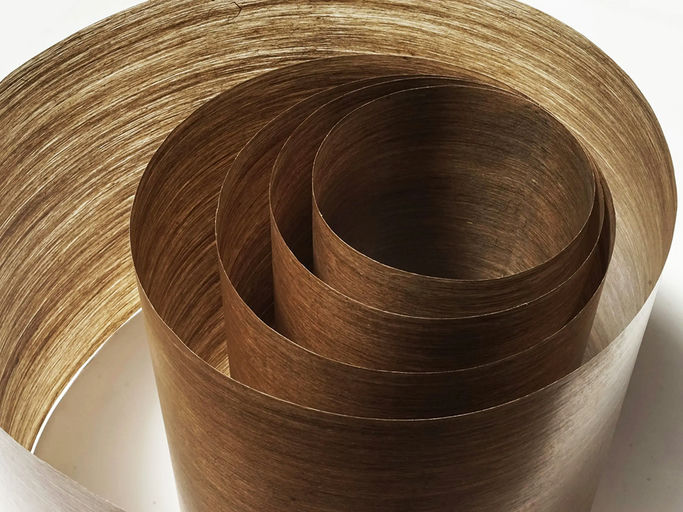 Ekoa by LingroveLingroveEkoa by Lingrove includes a range of flax fibre reinforced composites suitable for processing via standard composite manufacturing techniques such as wet lay-up, compression moulding, infusion and resin transfer moulding (RTM).Image: Lingrove
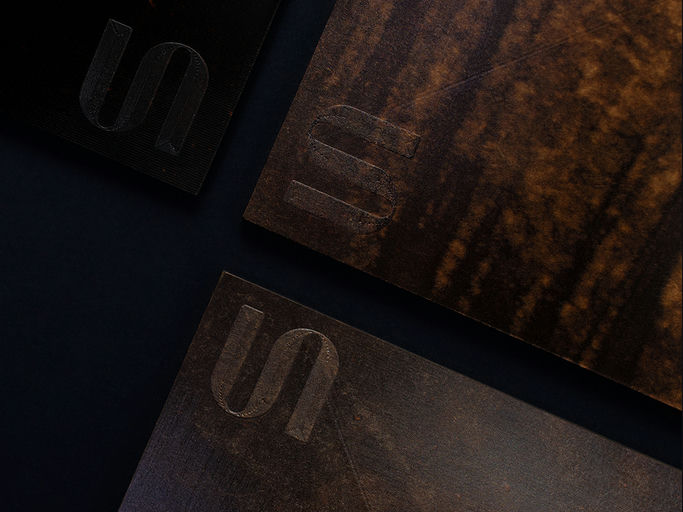 PaperShell bio-based paper laminatePaperShellPaperShell is produced with kraft paper laminated with high-strength bio-based resin (such as furan).Image: PaperShell
Filled plastics: composites by the tonne
Most composites are not hand-laid laminates but plastic granules with chopped fibre mixed in, injection moulded by the million. Glass-filled nylon and polypropylene are in every car and power tool.
Adding glass often lowers the footprint per kilo, because glass is lower in carbon than the plastic it replaces: nylon with 30% glass is 5.15 kg CO₂e/kg. Adding carbon fibre raises it: nylon with 20% carbon fibre is 10.6 kg CO₂e/kg.
These compounds can be reground and remoulded, but the fibres get shorter each time and the properties fall, so in practice they are downcycled.
One idea avoids the problem. In self-reinforced polypropylene (2.25 kg CO₂e/kg) both fibre and matrix are polypropylene, so the whole part is a single material that recycles with ordinary PP.
Short- and long-fibre moulding compounds (kg CO2e per kg)
04Watch-outs
The warnings
Beyond carbon, the concerns are chemistry and dust. Uncured epoxy and polyester resins contain sensitisers and solvents such as styrene, a risk for the people who make the parts. Cutting and sanding cured composite releases fine fibre dust. And because composites are made from fossil resins and energy-hungry fibres, almost all are tagged for non-renewable ingredients.
Concerns tagged on fibre and resin grades (number of grades)
Out of 60 grades.
After use: the hard part
The first big generation of composite products is now wearing out. The EU is expected to generate more than a million tonnes of composite waste a year by 2030, a third of it wind turbine blades, while recycling capacity worldwide is under 100,000 tonnes a year.
What happens to it today:
- Cement kilns. Shredded glass-fibre composite is burned as fuel and the glass becomes part of the clinker. This is the main route for blades.
- Grinding. Milled composite is used as filler. Low value.
- Pyrolysis. Heating without oxygen burns off the resin and frees the fibres. For carbon fibre this works: recycling takes 3 to 30 MJ per kilo against hundreds for new fibre, though the recovered fibres are short and tangled, so they go into moulding compounds and mats and not back into aircraft. For glass fibre the sums are harder: a 2026 UK study found that glass fibre recovered from blades currently has a higher footprint than new.
- Reuse. Blade sections become bridges, shelters and sign gantries. Small numbers, real savings.
Europe's wind industry has banned itself from landfilling blades since 1 January 2026, and Austria, Finland, Germany and the Netherlands ban it by law. There is no EU-wide ban yet.
For a designer: a composite earns its place where its lightness or durability saves more than it costs. Where it does not, a single material that can be recycled is the better choice.
- 2021WindEurope calls for an EU ban on landfilling blades
- 1 Jan 2026Wind industry's voluntary landfill ban starts
- 2030EU composite waste expected to pass 1 million tonnes a year
Sources: CompositesWorld, A framework for bankable composite recycling projects · CompositesWorld, REWIND project and the wind sector's landfill ban · CompositesWorld, SusWIND white paper on recycled glass fibre · Alsubaie and Yang, Recycled carbon fibre in circular economy applications (2026) · Balkan Green Energy News, national landfill bans for blades
05Specifying
How composites are made
Hand lay-up, infusion, pre-preg and autoclave curing, pultrusion, compression moulding and injection moulding differ hugely in energy and waste. Autoclave-cured pre-preg is the most energy-hungry and wasteful; offcuts of uncured carbon fibre can be a third of what is bought. Pultrusion and moulding compounds waste little.
Number of grades that list each process.
More from Spotlight
Plant-fibre and paper-based composites from Spotlight, the Spot Material innovation library.
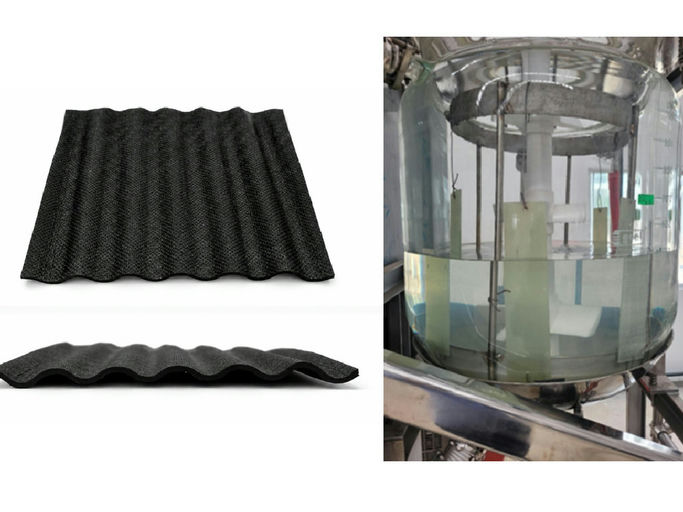 Recyclamine recyclable epoxy system by Aditya BirlaAditya Birla Chemicals (Advanced Materials)Recyclamine is a recyclable epoxy technology from the Aditya Birla Group's chemicals business (Mumbai, India), first introduced to industry in 2012. Its epoxy resins and curing agents have cleavable bonds built into the cross-links.Image: Aditya Birla Chemicals (Advanced Materials)Twaron Next para-aramid fibre with recycled or bio-based content by Teijin AramidTeijin AramidTwaron Next is a para-aramid fibre that Teijin Aramid introduced in November 2025 in two versions.
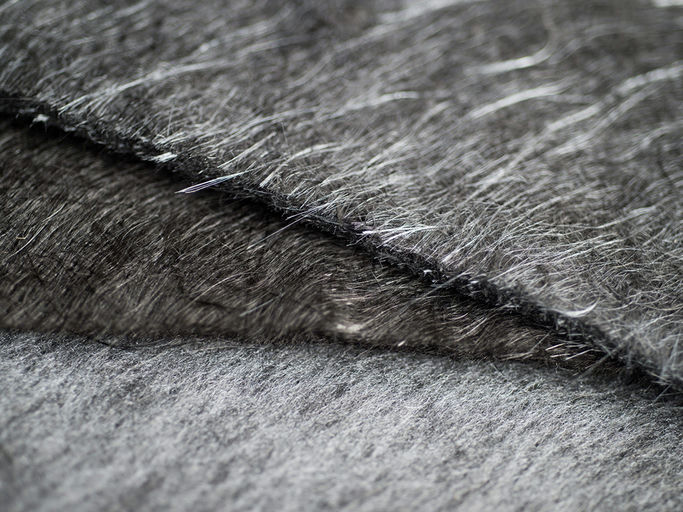 Recycled carbon fibre (rCF)Gen 2 CarbonRecycled carbon fibre (rCF) by Gen 2 Carbon is produced from carbon fibre composite waste, both waste generated in manufacturing (around 30% of produced carbon fibre ends up as waste at some point in the process) and end-of-life components.Image: Gen 2 Carbon
 Super Sap bio-based epoxy resin (bio-EP)Entropy Resins (Gougeon Brothers)Super Sap by Entropy Resins is a modified epoxy that contains 15-37% bio based ingredients (bio-EP). These ingredients are sourced from waste streams, such as wood pulp or biofuel production.Image: Entropy Resins (Gougeon Brothers)
Specifying composites well
A short checklist:
- Ask first whether the part needs to be a composite. If weight is not saving energy in use, a single recyclable material may be better.
- Use the lowest-carbon fibre that meets the load: flax or basalt before glass, glass before carbon.
- Keep carbon fibre for where its stiffness per kilo really pays, and ask about recycled carbon fibre for non-critical parts.
- Prefer thermoplastic or separable resins, and ask who takes the part back.
- Avoid mixing fibres, foam cores and metal inserts that cannot be separated.
- Cut waste in making: near-net shapes, nested cutting, reuse of offcuts.
- Design for a long life and repair; composites repair well.
Then test a material in the Material checker and compare the routes.