Deep dive
Chasing lightness: what a lighter bicycle frame costs
A lighter bike costs more money. It also costs more carbon. Taking a road bike frame as the example, this guide compares four frame materials, shows why the shape of a tube matters as much as what it is made of, and counts how many frames each material gives you for a tonne of CO2.
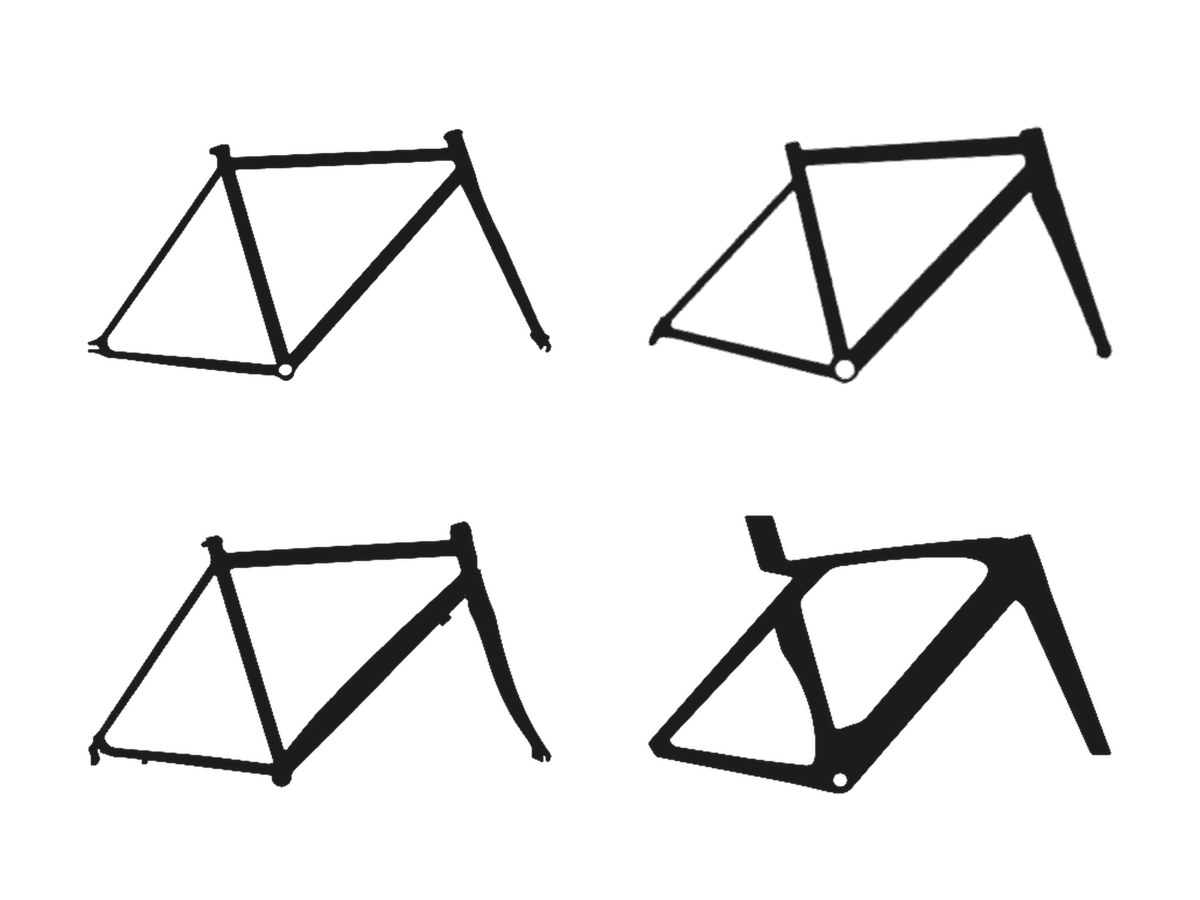
Four frames
One road bike frame in four materials. Weights are typical; carbon and cost are for making the material only, shown as a mid-point with the range in brackets.
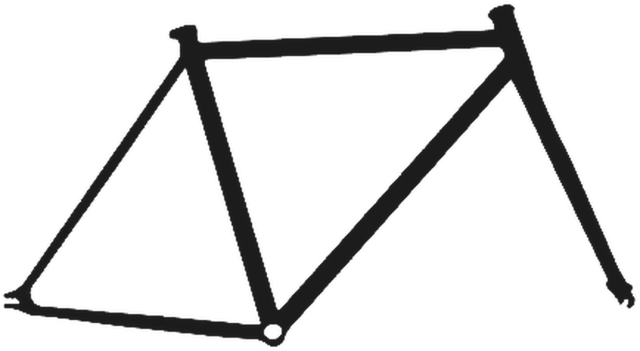
Alloy steel
The traditional choice: slim tubes, brazed or welded. The heaviest of the four, and by a long way the lowest in carbon and cost.
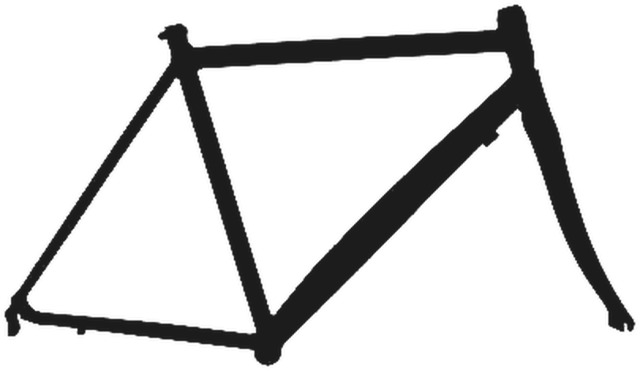
Aluminium alloy
The everyday modern frame: fat, thin-walled tubes, welded. Its footprint depends heavily on where the metal was smelted.
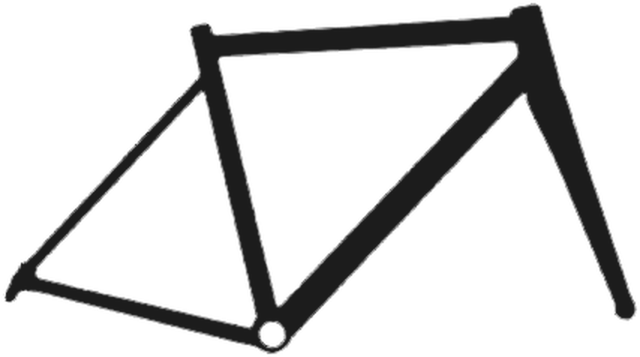
Titanium alloy
Light, tough and resistant to corrosion, so frames are often left unpainted. The most carbon-intensive and the most expensive material here.
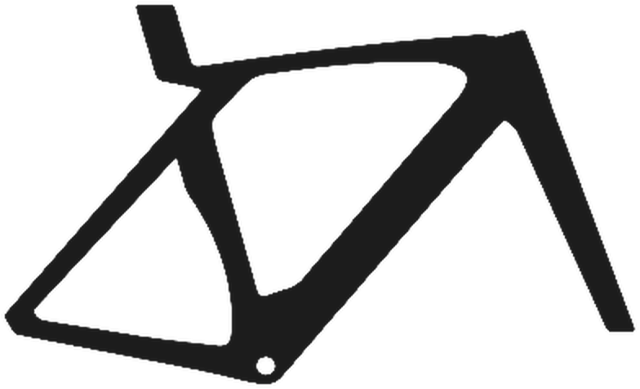
Carbon fibre epoxy
Moulded, not welded, so the frame can take almost any shape, with the fibres laid where the load is. The lightest of the four.
Every step lighter than steel costs more carbon. The aluminium frame is 0.5 kg lighter and takes about 4 times the carbon. The carbon fibre frame is 0.9 kg lighter, about half the weight, and takes nearly 5 times the carbon. Titanium saves 0.4 kg and takes about 14 times.
The material in a frame costs little next to the price of the bike: forming, welding or moulding, finishing and the brand make up most of it. But the order is the same. Steel and aluminium are cheap to buy by the kilo, carbon fibre and titanium are not.
The figures behind it
Per kilo of material, from the Spot Material database. Each name opens the material in the checker.
| Material | Carbon, kg CO2e per kg | Used | Cost, USD per kg | Used | Density, kg/m³ | Stiffness, GPa |
|---|---|---|---|---|---|---|
| Alloy steelChromoly | 1.5 to 2.5 | 2 | 1 to 5 | 3 | 7,850 | 200 |
| Aluminium alloy6061 | 6.3 to 14.8 | 10.6 | 3 to 6 | 4.5 | 2,700 | 70 |
| Titanium alloyGrade 9, Ti 3-2.5 | 30 to 40 | 35 | 21 to 28 | 24.5 | 4,480 | 100 |
| Carbon fibre epoxy60% continuous carbon fibre | 14 to 22 | 18 | 12.5 to 18.5 | 15.5 | 1,320 | 134 to 141 along the fibre |
Why shape matters
Aluminium is a third of the weight of steel, so an aluminium frame should be far lighter. It is also a third as stiff. Divide stiffness by density and steel, aluminium and titanium come out almost the same: about 25, 26 and 22 GPa per g/cm³. Swap the metal and keep the tube, and you gain close to nothing.
The saving comes from the shape. The bending stiffness of a tube grows with the cube of its diameter, but its weight grows only in step with it. Make a tube bigger and its wall can be made much thinner for the same stiffness. Steel is so dense that its walls are already as thin as they can sensibly go, well under a millimetre on a good frame. Aluminium, at a third of the density, has room to grow: that is why aluminium frames have fat tubes.
The nine profiles below are all one metre long and drawn to the same scale. Stiffness is in bending, against the solid steel rod.
Steel
One size, three shapes. The I-beam keeps nearly all of the rod's stiffness with a third of the metal.
- Weight
- 3.14 kg
- Stiffness
- 1.7×
- Carbon
- 6.3 kg CO2e
- Weight
- 2.47 kg
- Stiffness
- 1×
- Carbon
- 4.9 kg CO2e
- Weight
- 0.82 kg
- Stiffness
- 0.9×
- Carbon
- 1.6 kg CO2e
Aluminium
Three tubes. Each time the tube grows, the wall can thin: first the weight halves at the same stiffness, then the stiffness rises too.
- Weight
- 0.65 kg
- Stiffness
- 1×
- Carbon
- 6.8 kg CO2e
- Weight
- 0.32 kg
- Stiffness
- 1×
- Carbon
- 3.4 kg CO2e
- Weight
- 0.31 kg
- Stiffness
- 1.6×
- Carbon
- 3.3 kg CO2e
Carbon fibre composite
A solid beam, a tube and a moulded profile. The profile is the lightest of all nine and five times as stiff as the steel rod.
- Weight
- 0.63 kg
- Stiffness
- 1×
- Carbon
- 11.3 kg CO2e
- Weight
- 0.24 kg
- Stiffness
- 1.4×
- Carbon
- 4.3 kg CO2e
- Weight
- 0.22 kg
- Stiffness
- 5.1×
- Carbon
- 4.0 kg CO2e
Where it stops. A wall that is too thin dents under a thumb and buckles under load. The 50 mm aluminium tube with a 0.75 mm wall is at or past that limit, which is why real frames thicken the wall at the ends, where the welds and the loads are.
Why carbon fibre goes further. It is not welded from tube stock, so the section can change along its length: deep where the frame bends, slim where it does not. The fibres can also be pointed along the load. That direction matters: along the fibre this composite reaches about 137 GPa, with fibres in random directions about 55. The profiles here use 96, half way between, as a stand-in for a real layup.
How many frames for a tonne of CO2?
The same figures turned around, with recycled metal and the two ends of the aluminium range added. The four frames from the top of the page are in bold.
A tonne of CO2 makes 263 steel frames, 68 aluminium, 56 carbon fibre or 19 titanium. Where the aluminium comes from moves it from 48 to 113.
Recycled metal changes the picture more than any swap between materials. A recycled aluminium frame comes in below a new steel one, and recycled steel is lower still. Both are the same alloys, in the same tubes, at the same weight.
In perspective
Rider, 75 kgBike, 8.1 kg with a carbon fibre frameExtra for a steel frame, 0.9 kg
The most a frame material saves here is 0.9 kg, steel to carbon fibre. With a 75 kg rider on a 9 kg bike, that is about 1% of what is being pedalled.
Lightness matters most where the product is most of the weight being moved: a car body, an aircraft, a parcel. On a bicycle, most of the weight is the rider.
What to take from it
- Shape first. A bigger section with a thinner wall saves weight without changing the material, its supplier or its footprint per kilo.
- Lighter is not lower carbon. Per frame, the lightest materials here take four to fourteen times the carbon of steel.
- Ask where the metal comes from. Aluminium more than doubles between European and global-average smelting, and recycled content cuts it by most of the rest.
- Keep the saving in proportion. Weigh what is saved against everything else that is moving.
Other frame materials
Frames are also made from these. No frame weights are assumed, so the figures are per kilo of material only.
- Bamboo · 0.2 kg CO2e per kg
- Flax fibre composite · 2.7 to 4.6
- Magnesium alloy · 10 to 28
- Recycled alloy steel · 0.4 to 0.9
- Recycled aluminium · 0.5 to 2.2
For the wider subject, see the briefing on lightweighting.
How it was worked out
- Frame weights are assumptions for a typical road frame without fork: steel 1.9 kg, titanium 1.5 kg, aluminium 1.4 kg, carbon fibre 1.0 kg. Real frames vary by size, maker and price.
- Carbon and cost per kilo are the mid-points of the ranges in the Spot Material database on 25 November 2026, for the grades named in the table. They cover making the material, not forming, welding, moulding, painting or shipping the frame.
- Frame carbon is frame weight times carbon per kilo. Offcuts and scrap are not counted, which flatters carbon fibre and titanium, where more material is lost in making.
- Profiles: weight is cross-section area times density. Bending stiffness is the material's stiffness times the second moment of area of the section, compared with a 20 mm solid steel rod. The sizes were chosen for the comparison; they are not taken from any one frame.
- Carbon fibre profiles use a density of 1,420 kg/m³ and a stiffness of 96 GPa, half way between the database values for fibres in random directions (55 GPa) and fibres all in one direction (137 GPa).
- The rider is 75 kg and the bike 9 kg with a steel frame. Change either and the 1% moves a little, not a lot.
Have a material in mind?
The checker shows its carbon, its concerns and what you could use instead, for more than 800 materials or every part of a product at once.