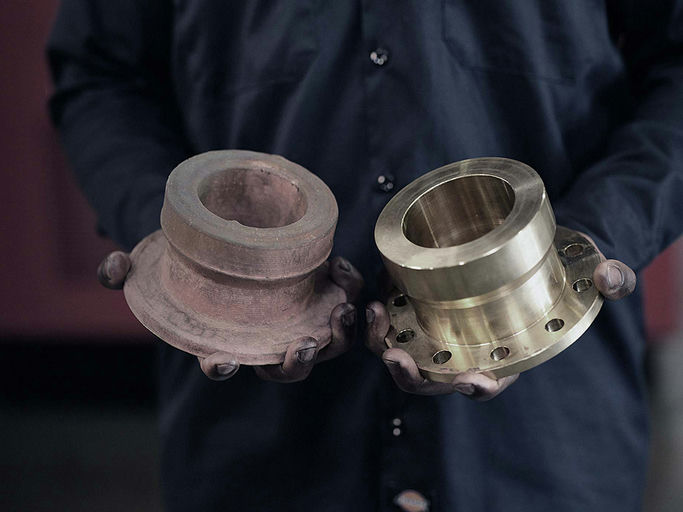
Photo: Cast brass door handles coming out of the mould, before deburring, polishing and plating.
01Why metals
How good are metals?
Metals are strong, stiff, tough and conductive, and they last. A steel beam, a zinc roof or a brass handle can serve for generations, and at the end the metal can be melted and made again without losing what made it useful. 99% of the 175 metal grades in the database are tagged Recycle.
The catch is the first life. Turning ore into metal takes a great deal of heat and electricity: iron and steel alone account for about 7% of the world's energy-related CO₂ emissions, and about 10% once the electricity and off-gases they use are counted. So three questions matter more than the alloy name:
- How much of the metal is recycled?
- What energy did the smelter or furnace run on?
- How long will the part last, and can it come apart again?
Where metal's carbon comes from
Per kilo, the everyday structural metals sit well above timber and close to many plastics. Mild steel is 2.1 kg CO₂e/kg and stainless steel 4.4 kg CO₂e/kg, while primary aluminium is 10.6 kg CO₂e/kg and titanium 35 kg CO₂e/kg.
Recycling changes the picture more than any alloy choice. Recycled aluminium is 1.35 kg CO₂e/kg and low-carbon steel 0.5 kg CO₂e/kg. Metals also tend to need fewer kilos for the same job, because they are strong enough to be thin, and they outlast most alternatives. Compare parts that do the same work over the same life, not kilo against kilo.
Carbon footprint, raw material to factory gate (kg CO2e per kg)
Base, light and precious
The database holds 175 metal grades in 12 families. They fall into three groups:
- Base metals such as iron, steel, zinc, copper and lead: a few kilos of CO₂e per kilo.
- Light metals made by electrolysis, such as aluminium and magnesium, and titanium: far higher when new, because they take so much electricity.
- Precious metals, mined from very low-grade ores: 18 ct gold is 14,700 kg CO₂e/kg and sterling silver 273 kg CO₂e/kg. They are left out of the chart and the stats on this page so the other families stay readable; recycled gold and silver are the obvious choice wherever they will do.
Typical carbon by family (kg CO₂e/kg; number of grades in brackets)
Each family opens in the material checker.
02Steel
Steel: ore, scrap and hydrogen
Most of the world's steel is still made the old way: iron ore and coke in a blast furnace, then oxygen to burn off the carbon. The alternative is the electric arc furnace (EAF), which melts scrap with electricity and can run on up to 100% scrap. That is why low-carbon steel is 0.5 kg CO₂e/kg against 2.1 kg CO₂e/kg for conventional mild steel.
Scrap is not unlimited, though. About 85% of steel is recycled at the end of its life, but because steel products last around 35 years, scrap covers only about a third of the steel the world needs today. New steel from ore has to get cleaner too, which is where hydrogen comes in (next section).
Stainless steel is a recycling success: alloys are sorted and blended back into new grades, so recycled stainless is 1.6 kg CO₂e/kg against 4.4 kg CO₂e/kg for new 304. Ferritic grades such as 430 contain no nickel, which keeps them lower in carbon and cost.
Steel and iron grades compared (kg CO2e per kg)
Sources: ResponsibleSteel, Steel scrap
Green steel: who is making it, and when
Hydrogen can do the coke's job. In hydrogen direct reduction, hydrogen made with renewable electricity strips the oxygen from iron ore, leaving a sponge iron that an electric arc furnace turns into steel. The by-product is water rather than CO₂, and producers claim cuts of up to 95% against coal-based steel.
Sweden leads. Stegra (formerly H2 Green Steel) is building a plant in Boden for 2.5 million tonnes a year, but rising costs slowed construction in 2025; a €1.4 billion rescue round closed in June 2026 and the start date is under review. SSAB, with LKAB and Vattenfall in the HYBRIT project, is replacing its Luleå blast furnaces with electric arc furnaces fed by fossil-free sponge iron and scrap, planned for the end of 2028.
For designers, the practical point is that low-carbon steel exists now in small volumes at a premium, mostly from scrap-based EAF mills. Ask for the carbon figure per tonne and whether it comes from scrap or from cleaner ore-based steel; both matter, and they are not the same claim.
- 2024SSAB decides to build an electric arc furnace mill in Luleå
- 2025Stegra's costs rise and construction slows
- Jun 2026Stegra closes a €1.4 billion financing round
- End 2028SSAB Luleå mill planned to start
- 2029Proposed: 25% low-emission steel in EU public procurement
Sources: Canary Media, Stegra lands funding (Apr 2026) · EUROMETAL, Stegra completes €1.4 billion financing (Jun 2026) · EUROMETAL, SSAB proceeds with Luleå EAF conversion (Apr 2024) · EUROMETAL, Industrial Accelerator Act and low-emission steel (Mar 2026)
03Aluminium, copper and the rest
Aluminium: the electricity metal
Aluminium is made by passing a huge electric current through molten alumina, so the power behind the smelter decides most of its footprint. The industry's own figures put the global average for new aluminium at about 14.8 kg CO₂e/kg, with around 60% of that from electricity, and a range from about 4.5 to 22.
The chart shows the same extrusion alloy made four ways: coal-powered primary at 20 kg CO₂e/kg, primary smelted with hydropower at 3.5 kg CO₂e/kg, recycled post-consumer alloy at 1.35 kg CO₂e/kg and recycled wrought alloy at 1.35 kg CO₂e/kg. Recycling takes only about 5% of the energy of making new metal, and about three-quarters of all the aluminium ever produced is still in use.
The limit is again supply: recycled metal meets only about a third of demand, so specify recycled content where it is offered and low-carbon primary for the rest, and ask where the smelter is.
The same alloy, made four ways (kg CO2e per kg)
 Hydro Circal 75R aluminium alloyHydroHydro Circal 75R is recycled aluminium made up of a minimum of 75% post-consumer scrap, such as window frames, doors and facades that have reached the end of their life. The balance being a combination of manufacturing waste and alloying elements to bring it in line with 6060 specification. Image Hydro.Image: Hydro
 Hydro Reduxa aluminium alloysHydroHydro Reduxa is a series of certified low-carbon aluminium alloys. While the average kgCO2/kg for aluminium is 16.7, Hydro Reduxa has a maximum of 4.0. The reduction is achieved through the use of renewable energy (hydropower) and integrated manufacturing at Hydro's plants in Norway. Image Hydro.Image: Hydro
Sources: International Aluminium Institute, carbon footprint FAQs · International Aluminium Institute, 75% of all aluminium ever produced is still in use · International Aluminium Institute, Alu Story: a sustainable metal
Copper, zinc and the high-carbon metals
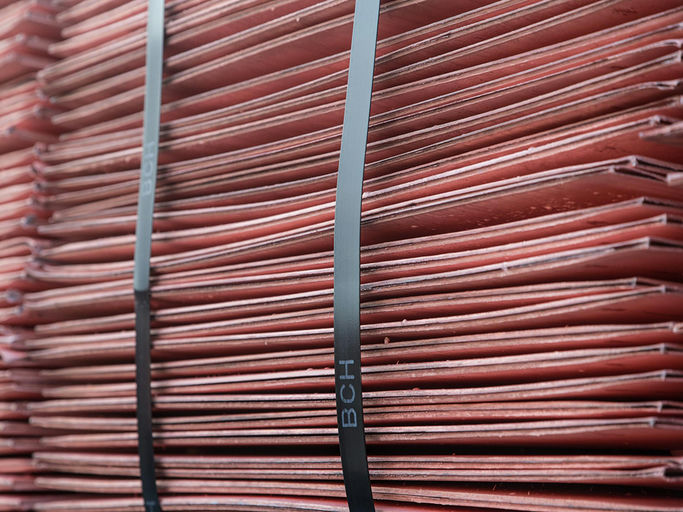
Copper and its alloys, brass and bronze, are among the most valuable scrap there is, so they are collected and remelted almost everywhere. Recycled copper is 0.8 kg CO₂e/kg against 2.75 kg CO₂e/kg for new copper. Electronics waste is a growing source.
Zinc lasts for decades as roofing and cladding, and most zinc is used to galvanise steel; when that steel is recycled the zinc boils off in the furnace and is recovered. Recycled zinc is 0.9 kg CO₂e/kg.
The light and specialist metals are the high-carbon end: nickel 12.3 kg CO₂e/kg, magnesium 19 kg CO₂e/kg and titanium 35 kg CO₂e/kg. They earn their place where weight, heat or corrosion really matter, and their scrap is worth keeping separate.
New and recycled, base and light metals (kg CO2e per kg)
04New metal technologies
Smelting without carbon
Even powered by hydro, aluminium smelting releases CO₂ directly, because the carbon anodes in each cell burn away as they work. Inert anodes replace them with materials that give off oxygen instead. ELYSIS, a joint venture of Alcoa and Rio Tinto, started its first commercial-size inert-anode cell (450 kA) at the Alma smelter in Quebec in November 2025, after first producing metal in a small cell in 2021. A multi-year test programme follows, with technical maturity aimed for the end of the decade.
Together with renewable power, inert anodes would take new aluminium close to zero direct emissions. Other routes are being tested for steel too, such as electrolysis of iron ore. None of this is on general sale yet: treat claims of zero-carbon primary metal with care and ask for the certified figure.
Sources: CIM Magazine, ELYSIS commercial-size cell milestone (Nov 2025)
Less metal, longer life: foams, printing and cold spray
The lowest-carbon kilo of metal is the one you don't use. Three technologies help:
Metal foams. Gas bubbles blown into molten aluminium make aluminium foam, a rigid, very light panel that absorbs sound and does not burn. Architectural foam panels are made with between 20% and 100% recycled content and are fully recyclable.
Additive manufacturing. Printing metal from powder, as with aluminium and stainless steel grades, uses a lot of energy per kilo, and making the powder adds more. It pays back when it saves material and weight: machining can turn 90% or more of a billet into chips (up to 95% for some titanium aircraft parts), while printing typically wastes about 10% or less, and topology-optimised parts can be much lighter.
Cold spray. Metal powder fired at supersonic speed bonds to a surface without melting. It can rebuild worn or damaged parts on site, from aluminium and copper to stainless steel and titanium, so parts are repaired rather than replaced.
Sources: ArchDaily, Alusion stabilized aluminium foam · Metal AM, How sustainable is metal 3D printing? · Sirris, Cold spray technology
05Watch-outs
The warnings
Almost every metal grade is tagged for non-renewable ingredients and a raw material that generates polluting by-products: mining moves vast amounts of rock, and the tailings, slags and red mud left behind can contaminate land and water for generations.
Where metal comes from matters as much as which metal. Indonesia now supplies more than half the world's nickel, much of it processed with power from coal plants built for the industry, with reports of deforestation, pollution and abuse around the mines. 11 grades on this page are flagged as potential conflict commodities (tin, tantalum, tungsten and gold), which the EU requires importers to trace.
The EU now treats many metals as strategic: copper, magnesium, nickel for batteries, titanium, tungsten and silicon metal are on its strategic raw materials list, with targets for more EU mining, processing and recycling by 2030.
Concerns tagged on metal grades (number of grades)
Out of 175 grades.
Sources: Indonesia Business Post, on Climate Rights International's nickel report (Oct 2025) · Ember, From captive coal to green nickel (Oct 2025) · Council of the EU, The Critical Raw Materials Act · EU JRC, EU critical and strategic raw materials
Coatings, mixes and the purity problem
Metals are infinitely recyclable in theory; in practice what goes into the furnace decides what comes out.
- Copper in steel. Shredded cars and appliances leave copper wire tangled in steel scrap. Typical shredded scrap holds about 0.4% copper, fine for reinforcing bar but too much for many sheet steels, which need under 0.1%. Copper cannot yet be removed from the melt, so mixed scrap gets downcycled.
- Alloy mixing. Aluminium alloys are easy to mix and hard to unmix. Keeping cast and wrought, and different alloy series, apart keeps scrap valuable.
- Coatings and plating. Paint, plastic films and laminates burn off or end up as dross. Decorative and hard chrome plating uses chromium(VI), a carcinogen; the EU is replacing its case-by-case authorisations with a REACH restriction expected around 2027. Trivalent chrome, PVD coatings and uncoated stainless are the alternatives.
- Bonded assemblies. Metal glued or foamed to plastic, as in some composite panels, is hard to separate. Mechanical fixings keep metals recyclable.
Sources: Daehn, Serrenho and Allwood, Removing residual copper from steel scrap (2019) · EcoMundo, Chromium(VI) moves to a REACH restriction (Oct 2025)
After use
Metal scrap has value, so it is collected even without regulation: 99% of metal grades are tagged Recycle, and 163 carry the Circular tag. Reuse is better still: steel sections, cladding and fixings can be taken down and used again with no melting at all. Design for disassembly, single alloys and mechanical joints keep metal at its most valuable.
Grades tagged with each end-of-life route, out of 175.
Rules and labels
Steel and aluminium are now in the front line of EU climate policy. Since 1 January 2026 the Carbon Border Adjustment Mechanism (CBAM) puts a carbon price on imported iron, steel and aluminium (as well as cement, fertilisers, electricity and hydrogen). Importers of more than 50 tonnes a year must be authorised and buy certificates, first surrendered in 2027 for 2026 imports. Expect suppliers to know and share their emissions per tonne.
Certification schemes cover where and how the metal was made: ResponsibleSteel for steel, the Aluminium Stewardship Initiative for aluminium, Veramark (formerly the Copper Mark) for copper, and the jewellery schemes for gold and silver. An EPD gives the product's carbon figure.
- Oct 2023CBAM reporting starts for importers
- May 2024Critical Raw Materials Act in force
- 1 Jan 2026CBAM definitive period: authorised importers only
- 2027First CBAM certificates surrendered (for 2026 imports); chromium(VI) restriction expected
- 2029Proposed: low-emission steel in EU public procurement
- Carbon Border Adjustment Mechanism (EU) 2023/956
- Critical Raw Materials Act (EU) 2024/1252
- REACH: proposed restriction of chromium(VI) substances (plating and surface treatment)
- ResponsibleSteel
- Aluminium Stewardship Initiative (ASI)
- Veramark Assurance (formerly the Copper Mark)
- EU Conflict Minerals Regulation (EU) 2017/821
- REACH: nickel release (Annex XVII entry 27)
- Environmental Product Declaration (EN 15804 / ISO 14025)
- Responsible Jewellery Council (RJC)
- Fairmined / Fairtrade Gold
Sources: Umweltbundesamt, CBAM simplified · Council of the EU, The Critical Raw Materials Act
06Specifying
How metals are shaped
Casting, forging, extrusion, sheet forming and machining each add energy and waste. Near-net-shape processes such as casting, extrusion and printing leave less to cut away; machining from solid can scrap most of the bar. Offcuts and swarf are valuable scrap if kept clean and sorted by alloy.
Number of grades that list each process.
More from Spotlight
Recycled and low-carbon metals from Spotlight, the Spot Material innovation library.
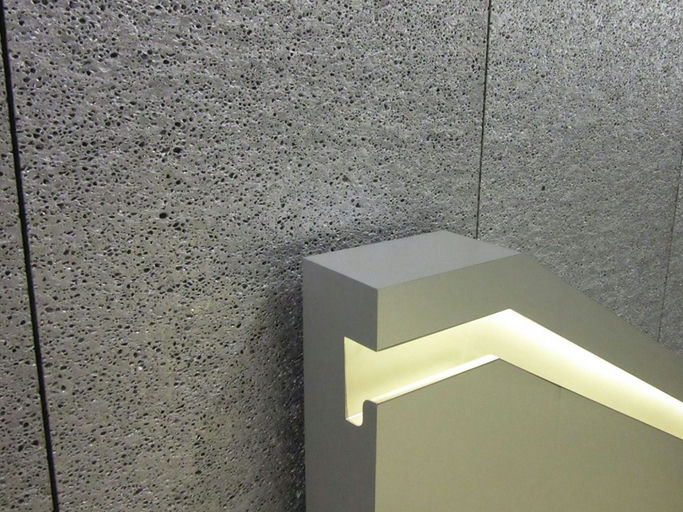 Alusion stabilised aluminium foam by Cymat TechnologiesCymat TechnologiesAlusion is a stabilised aluminium foam made by Cymat Technologies in Toronto, which holds the worldwide patents. An aluminium alloy containing fine ceramic particles is foamed and cast continuously into flat panels 12.7, 25.4 or 43.2 mm thick, with an open, cellular look.Image: Cymat Technologies
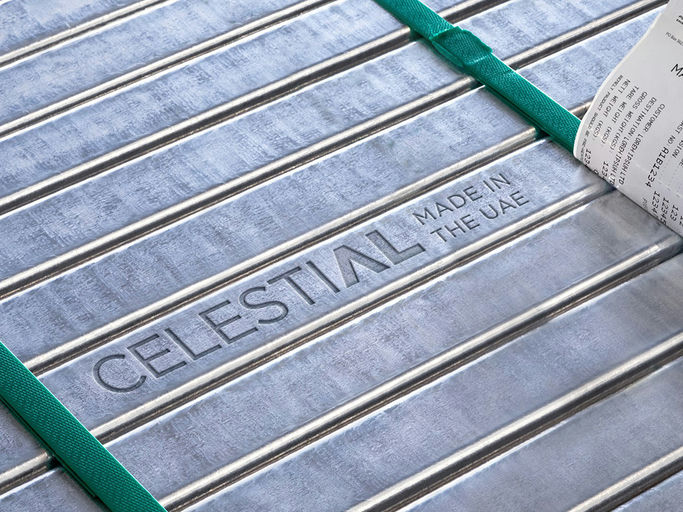 CelestiAL solar-powered aluminiumEmirates Global Aluminium (EGA)CelestiAL is primary aluminium made by Emirates Global Aluminium at its smelters in the UAE using solar electricity from the Mohammed bin Rashid Al Maktoum Solar Park and Noor Abu Dhabi. The solar supply comes through the grid and is tracked with renewable energy certificates. BMW Group was the first customer in 2021.Image: Emirates Global Aluminium (EGA)
 Cold spray metal 3D printing by SPEE3DSPEE3DSPEE3D, based in Melbourne, makes cold spray metal 3D printers. Metal powder is fired through a nozzle at supersonic speed using compressed air, and the particles bond on impact without melting, building up a part held by a six-axis robot.Image: SPEE3D
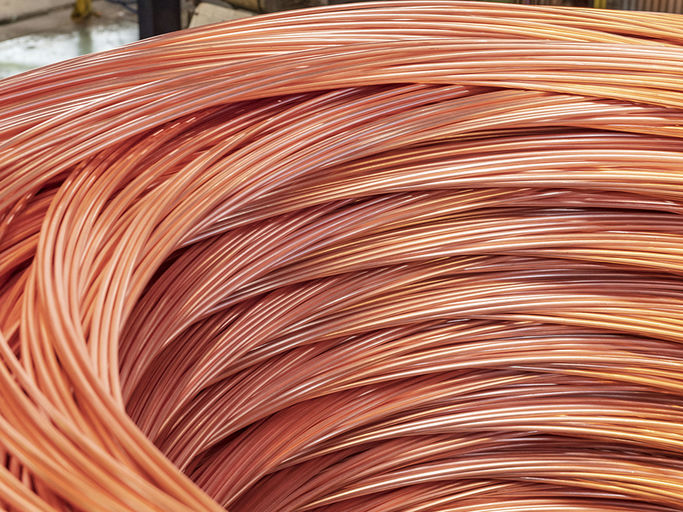 Copper bars and profiles with 70% recycled content by AurubisAurubisAurubis publishes verified product carbon footprints for its copper products. For copper bars and profiles from its Olen plant in Belgium, the 2025 footprint is 1.27 kg CO2e per kg, cradle to gate, down from 1.74 in 2023 and 1.40 in 2024. Recycled content for 2025 is 70%, verified by TÜV NORD CERT under ISO 14021.Image: AurubisAperam infinite low-carbon stainless steel by AperamAperamAperam infinite is Aperam's range of lower-emission stainless steel. It is made by two routes. In Europe, electric arc furnaces powered by nuclear and solar electricity melt up to 98% recycled material, much of it from Aperam's own recycling business.
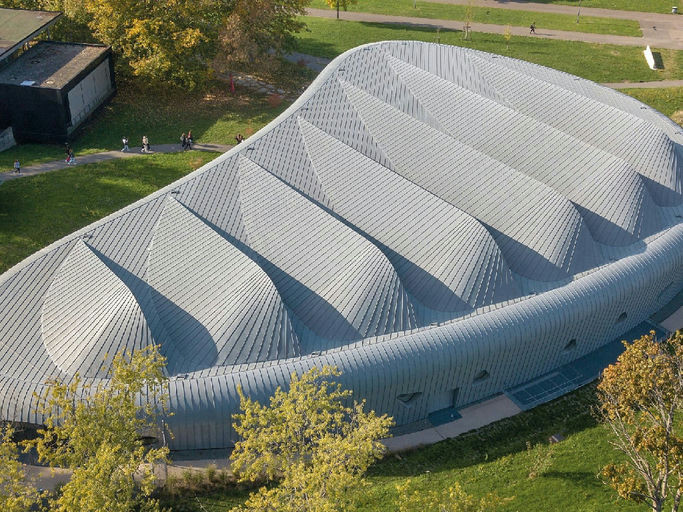 AZENGAR 3R 100% recycled titanium zinc by VMZINCVMZINCAZENGAR 3R is a rolled titanium zinc from VMZINC for architecture. VMZINC calls it the first 100% recycled titanium zinc product with no loss of quality; its product page says it is made from titanium zinc recovered from external production waste. The surface is etched, matt and textured, in a light grey tone.Image: VMZINC
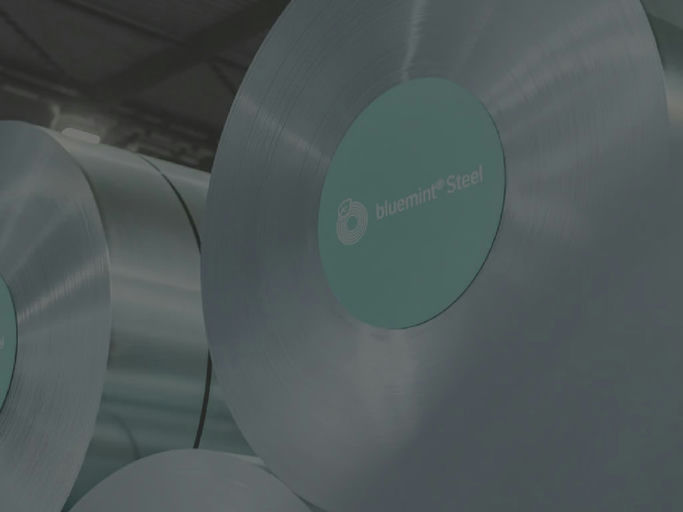 bluemint Steel CO2-reduced steel by thyssenkruppthyssenkrupp Steelbluemint Steel is thyssenkrupp Steel's name for lower-emission flat carbon steel made in Duisburg, Germany. The current product, bluemint recycled, replaces part of the iron ore in the blast furnace with specially processed steel scrap, so less coal is needed.Image: thyssenkrupp Steel
 Cast iron cookware with 61% recycled content by LodgeLodge Cast IronLodge makes cast iron cookware at its foundry in South Pittsburg, USA. Lodge says that on average each piece of its cookware is made of 61% recycled material: 12% recycled steel and 49% recycled iron reclaimed from its own production line.Image: Lodge Cast Iron
Specifying metals well
A short checklist:
- Ask for recycled content and the carbon figure per tonne, ideally in an EPD.
- For new aluminium, ask where it was smelted and on what power; low-carbon primary can be a fifth of coal-powered.
- For steel, ask whether it is scrap-based or ore-based, and certified by ResponsibleSteel or an equivalent.
- Use the least metal that does the job, and the least energy-hungry metal: steel before aluminium, aluminium before titanium, unless weight saved in use pays it back.
- Stick to one alloy per part where possible; avoid bonding metal to plastic.
- Prefer finishes that keep metal recyclable: anodising, powder coat, PVD or bare; avoid hexavalent chrome.
- Design for long life, repair and disassembly.
Then test a real part in the Material checker, and compare where it is made.